In this article
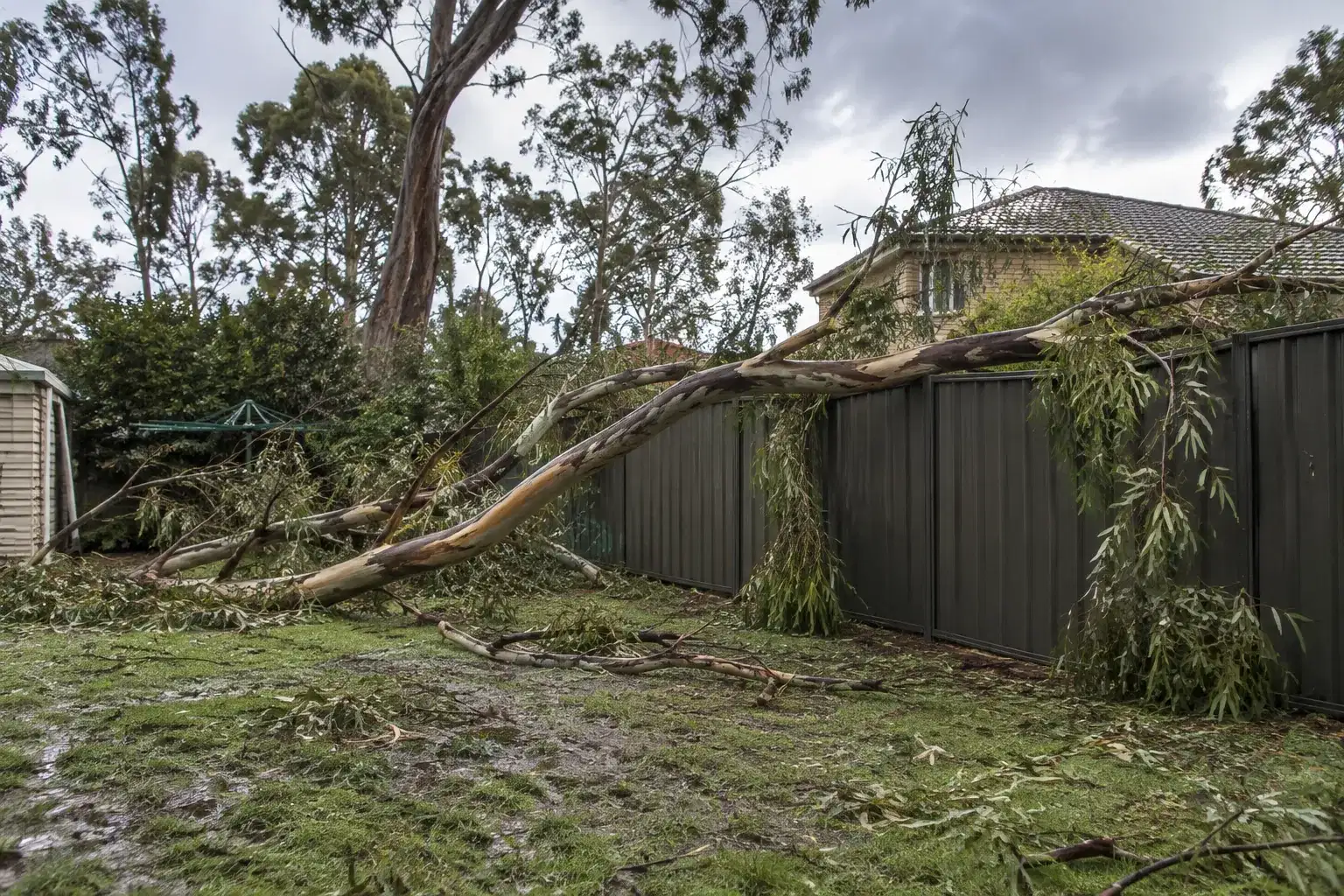
A failed tree is rarely finished failing. A limb across a roof is still holding load. A split stem is still moving. A lifted root plate is still connected to everything above it. That stored energy is the reason the sequence below is worth following even when the damage looks minor.
1. Establish what is still moving
From a safe distance - ideally from inside, or from at least the height of the tree away - work out what is holding what. Look for material that is hanging rather than resting, and for anything that has come down partly and stopped.
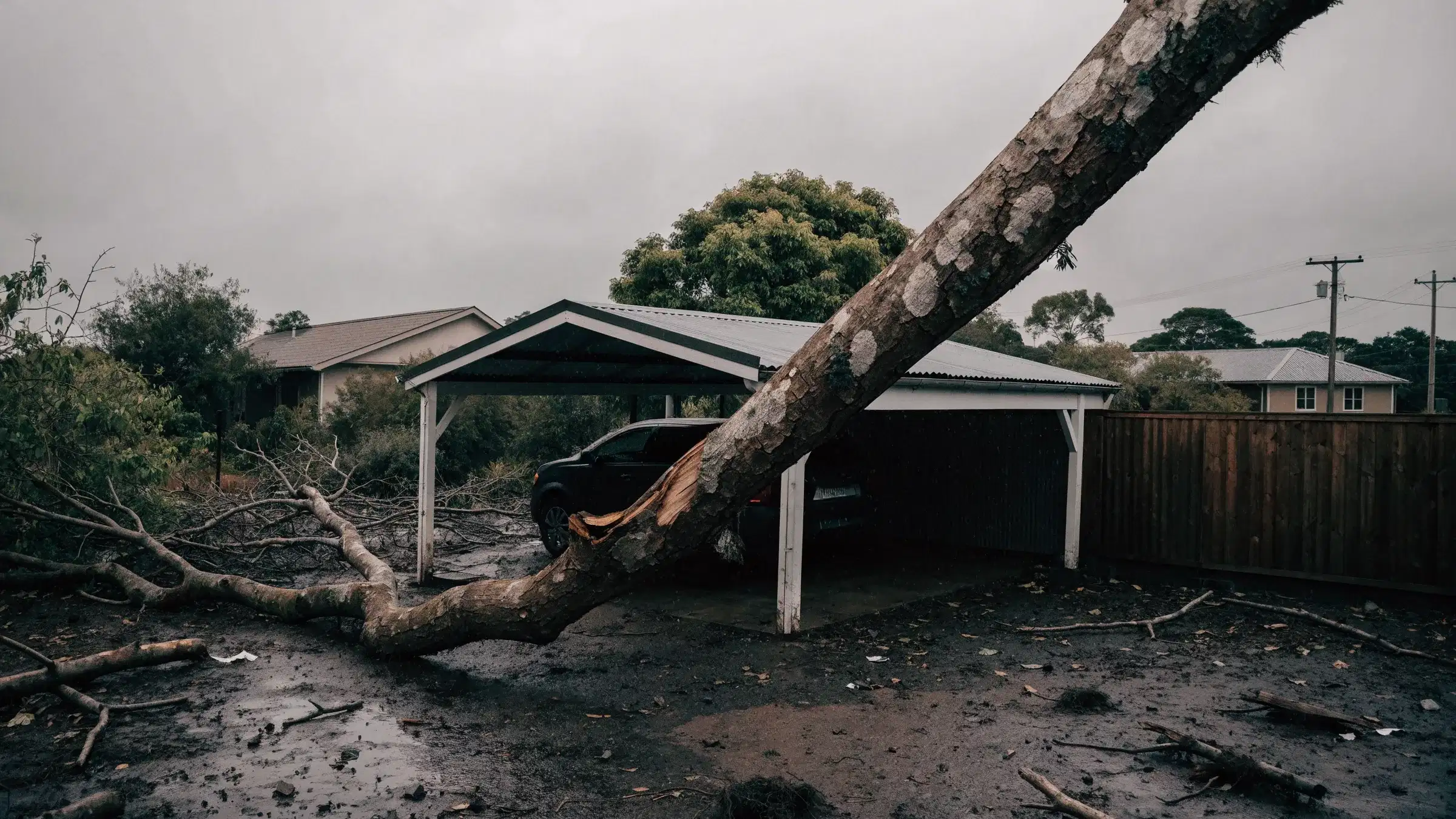
2. Close off the area
- Keep everyone out from under anything hanging or resting
- Move vehicles if it can be done without going under the tree - and leave them if it cannot
- Close off the approach so nobody wanders through it in the dark
- Assume the exclusion area is larger than it looks; material shifts sideways when it releases
3. Photograph it before anything changes
Two or three wide shots from a safe distance, showing the tree, what it is on, and the ground below. Then a couple closer if you can take them safely. These do two jobs: they let us bring the right equipment the first time, and they are usually what an insurer wants to see.
4. Call, and be specific
What has failed, what it is resting on, whether anyone has had to be moved, and how a truck would reach it. That is enough for a proper triage. Vague descriptions cost time at exactly the moment nobody has any.
What not to do
- Do not walk under a hanging limb, even briefly, even to look
- Do not pull, push or test anything to see whether it is stable
- Do not use a ladder against a damaged tree
- Do not cut material that is under tension - it does not release where you expect
- Do not clear debris from under a hanging section before it is down
- Do not go near anything in contact with a service line
| Safe for you to do | Leave for a crew |
|---|---|
| Keep people and vehicles out from under the tree | Bringing down anything hanging or resting |
| Photograph the damage from a safe distance | Cutting timber that is under tension |
| Pick up small debris well clear of the tree | Clearing underneath a hanging section |
| Report anything touching a line to your electricity provider | Any work near a power line |
What you can safely do after a storm, and what to leave for a crew
- Safe for you to do
- Keep people and vehicles out from under the tree
- Leave for a crew
- Bringing down anything hanging or resting
- Safe for you to do
- Photograph the damage from a safe distance
- Leave for a crew
- Cutting timber that is under tension
- Safe for you to do
- Pick up small debris well clear of the tree
- Leave for a crew
- Clearing underneath a hanging section
- Safe for you to do
- Report anything touching a line to your electricity provider
- Leave for a crew
- Any work near a power line
What happens next
Storm work runs in two stages. The first visit makes the situation safe: hazards isolated, hanging material brought down under control, access opened. That is often where day one ends, and it should be.
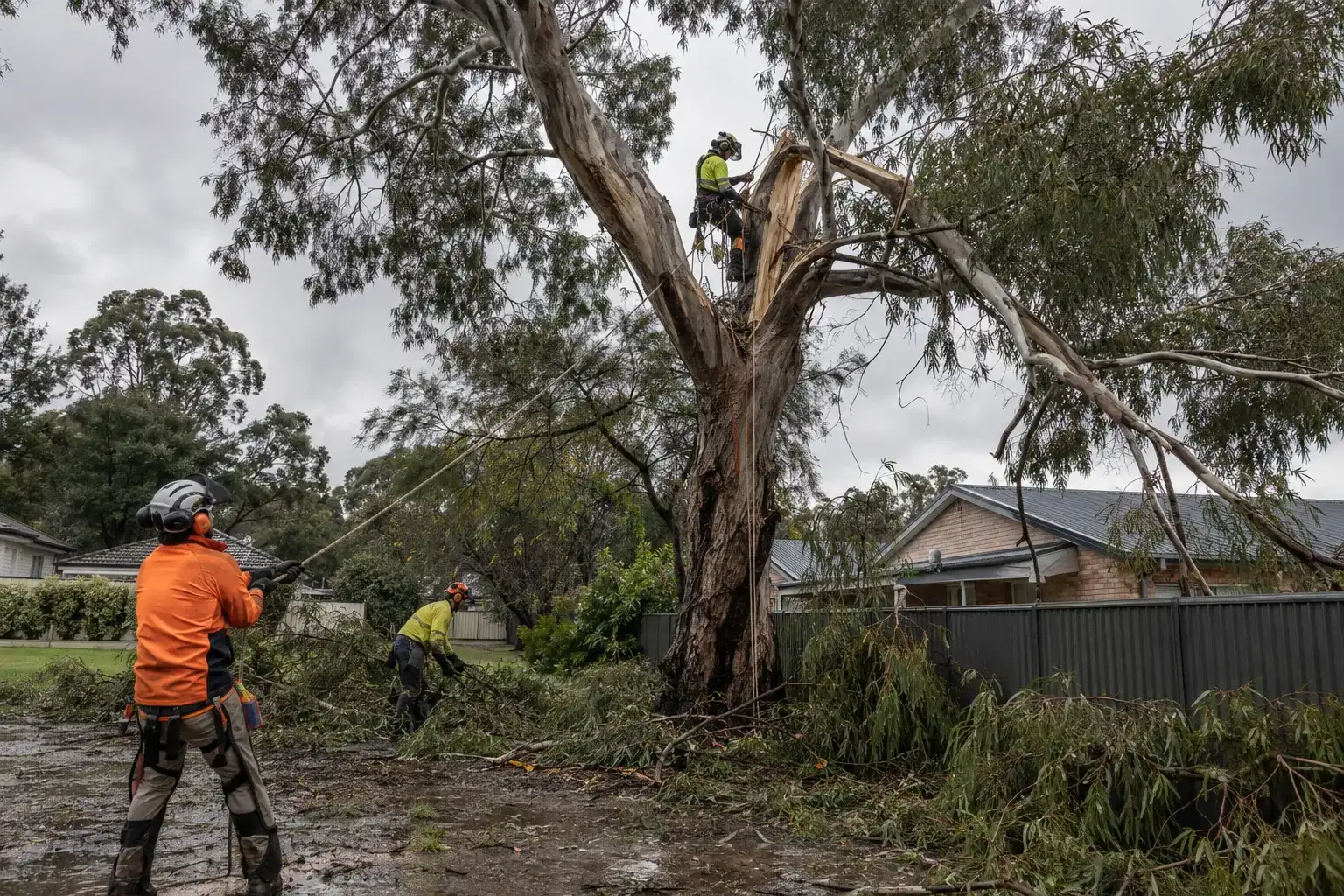
The second stage is the actual repair - removal, remedial pruning, or a decision to monitor. It gets scoped and quoted properly once nothing is in immediate danger, because decisions made under pressure at 6am are rarely the ones you would make a week later.
The work this article describes:Emergency Storm Damage