In this article
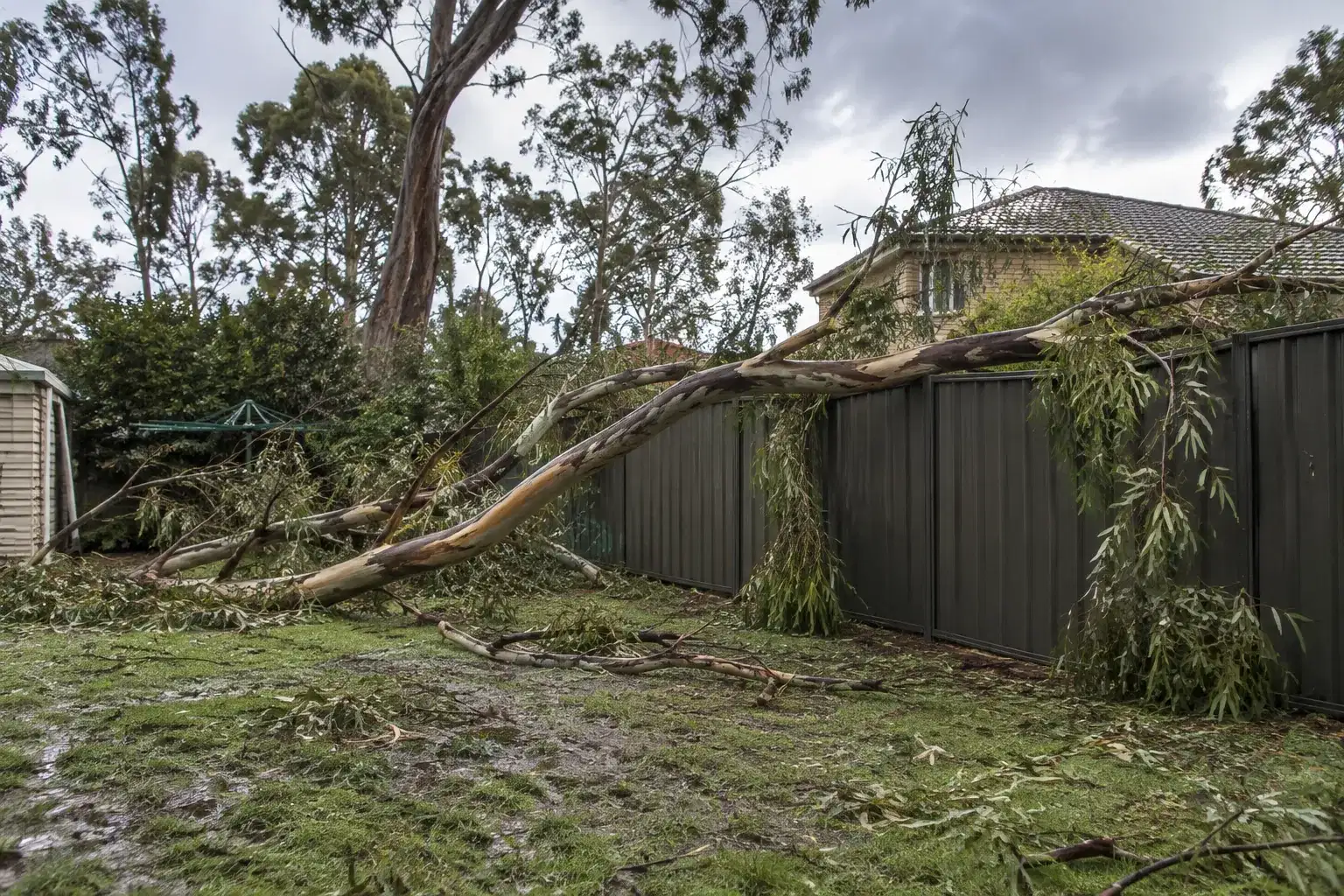
Trees rarely fail without notice. The problem is that the notice is usually quiet - a shift in the bark, a thinning at the top, a fungal body at the base that appears for two weeks in the wet and then goes away. None of it looks like an emergency, which is exactly why it gets walked past.
You do not need to diagnose anything. You need to notice change, and know which changes are worth a phone call.
Start at the base
The base tells you more than the crown does, and almost nobody looks at it. Walk the full circumference of the trunk and look at where it meets the ground.
- Soil lifting, cracking or doming on one side - a root plate that has started to move
- Fungal brackets or mushrooms growing on or beside the trunk, especially recurring in the same place
- A trunk that goes straight into the ground with no flare - often a sign of buried or girdling roots
- Cavities, soft wood, or bark missing in a patch at the base
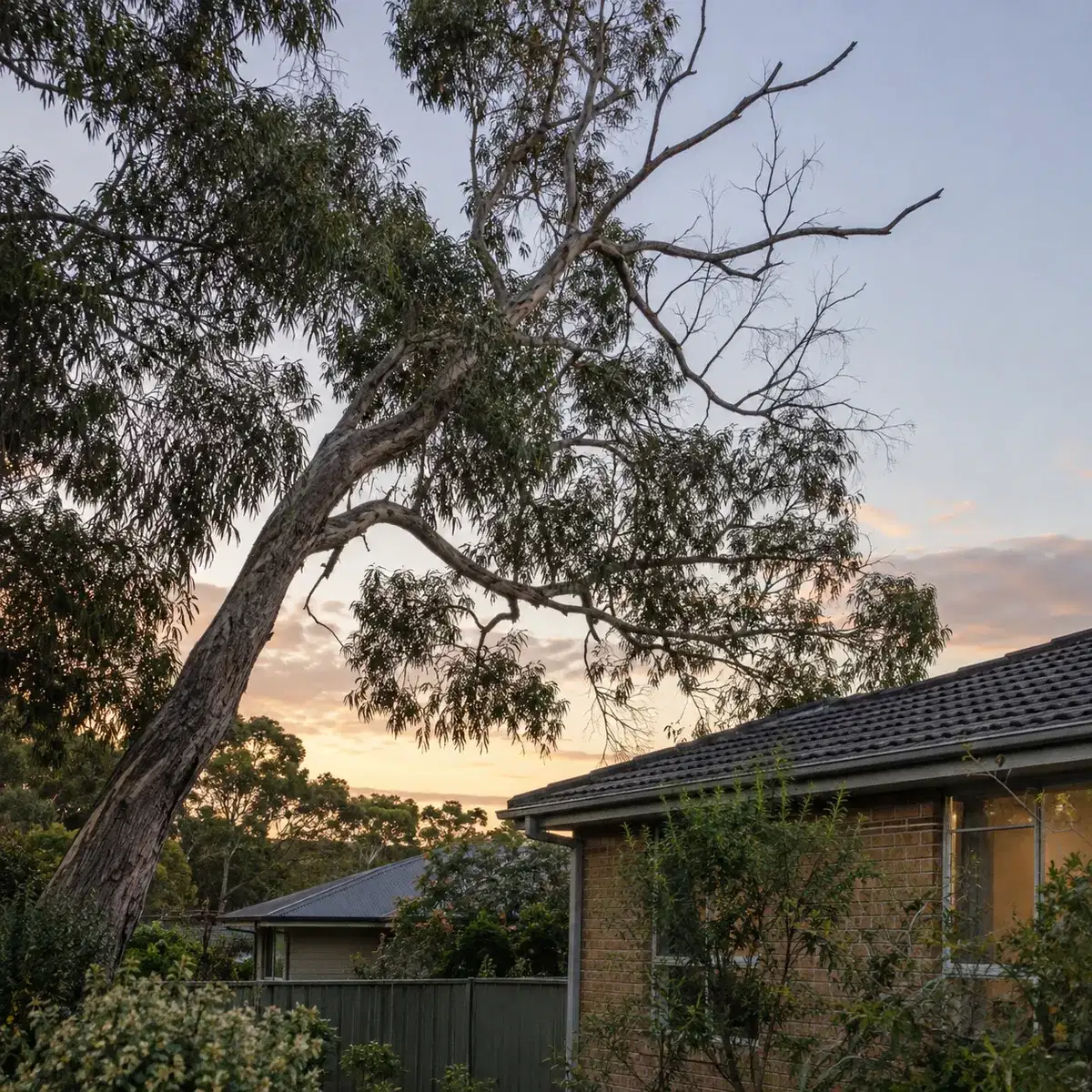
- A visible change in the lean, particularly a recent one
Then the trunk and the major unions
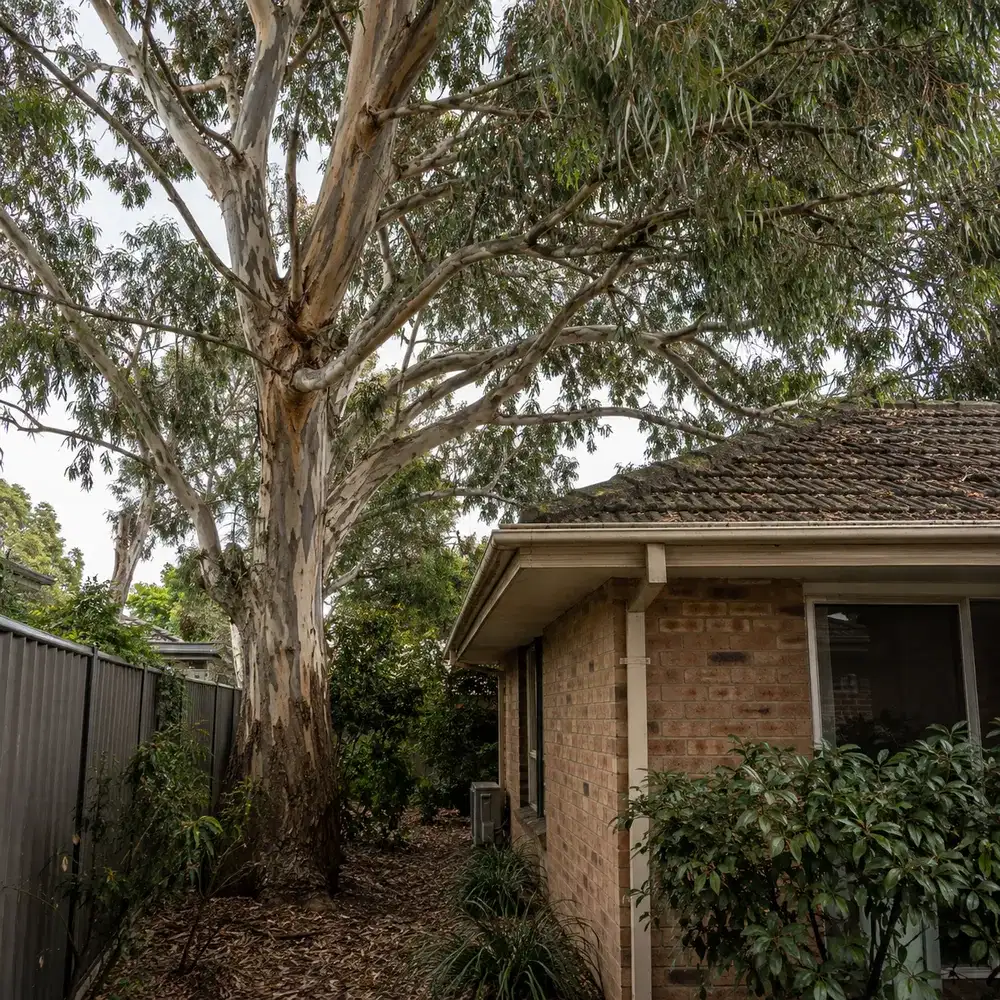
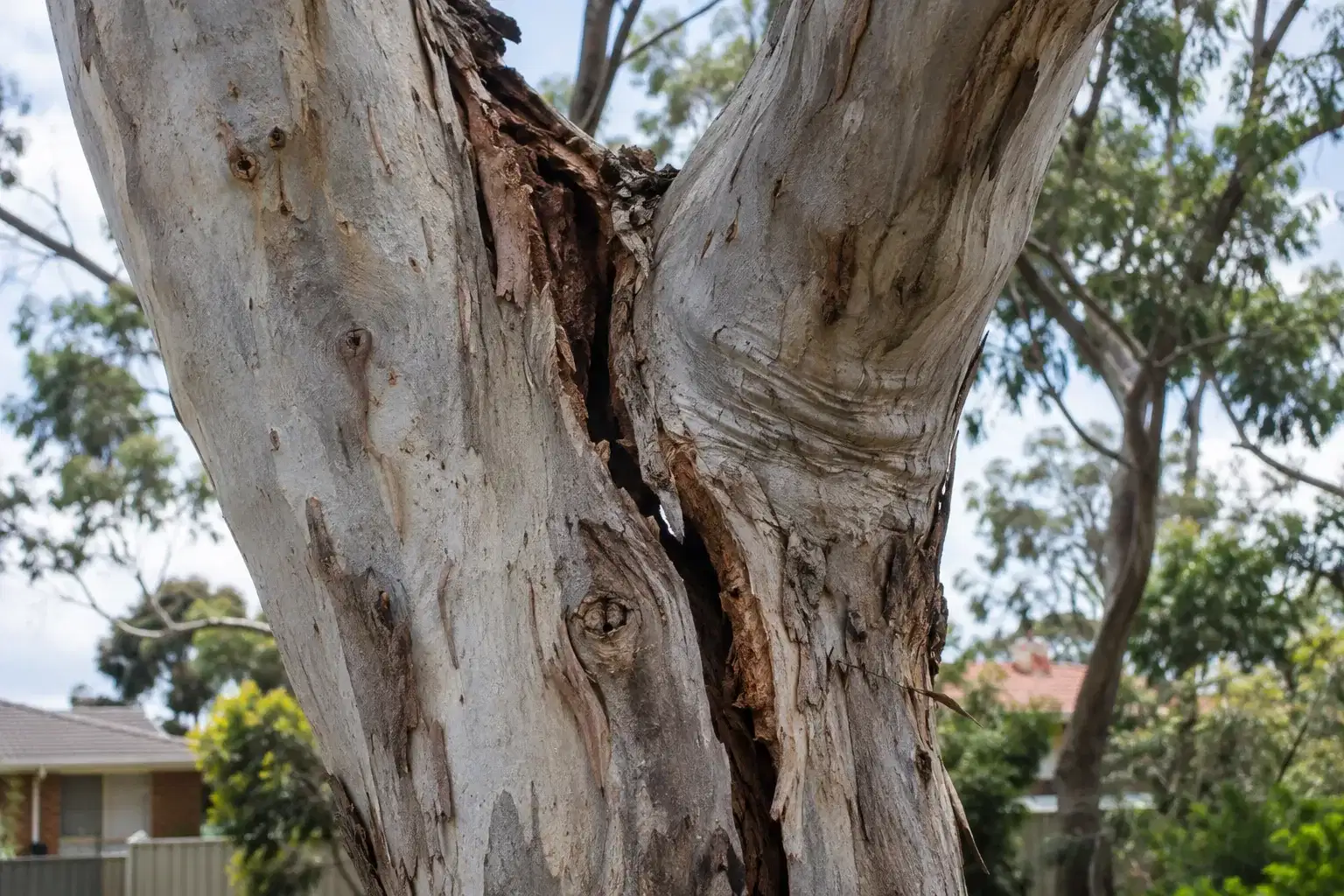
Follow the trunk up to where it divides. Unions - the points where a trunk splits into two or more stems - are where a lot of failures start.
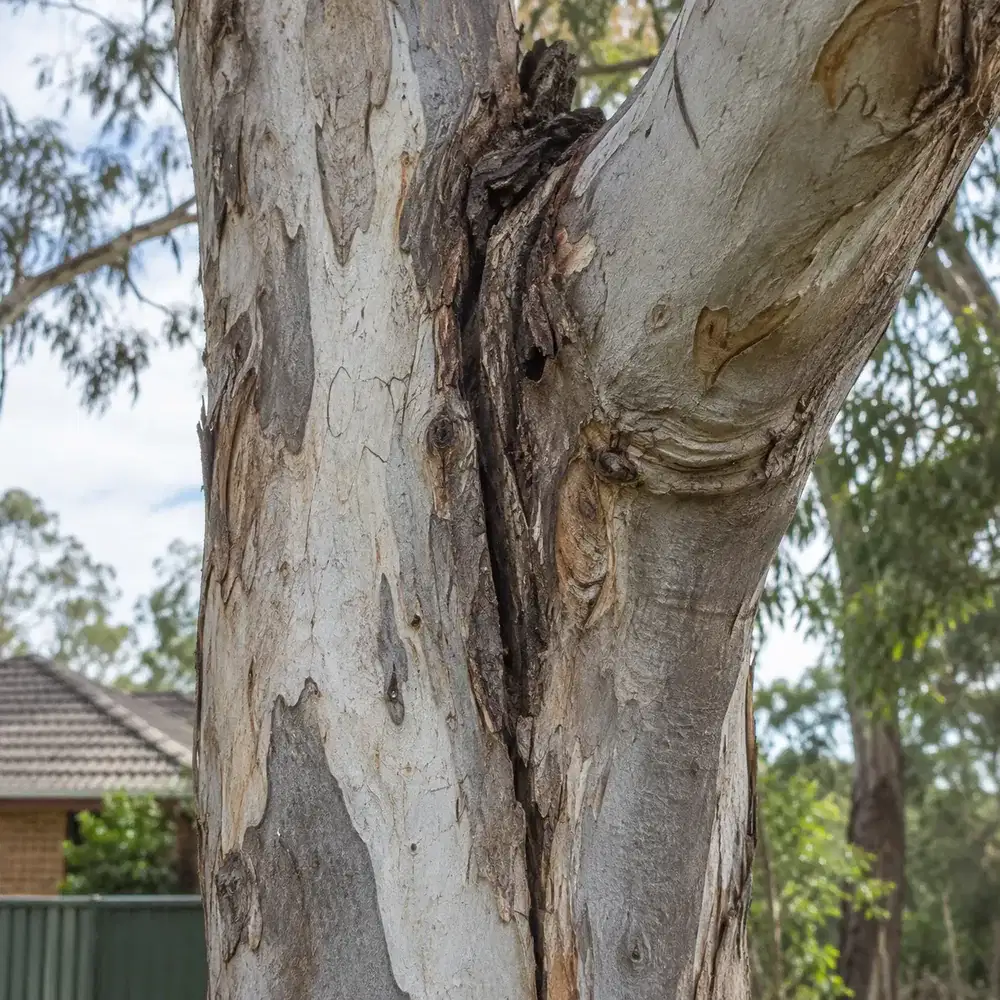
- A vertical crack or split, particularly running down from a union
- Bark that appears squeezed or ingrown where two stems meet, rather than a clean raised ridge
- Two stems of similar size forming a tight V rather than a U
- Weeping, staining or an area of bark that sounds hollow when tapped
- Old pruning wounds that have not sealed over after several seasons
Finally the crown
The crown is where most people start looking, and it is the least specific of the three. A thin crown can mean drought, root damage, disease, or a season the tree simply did not enjoy. What matters is comparison - to the same tree last year, and to similar trees nearby.
- Dieback at the very top, or on one distinct side
- Deadwood accumulating year on year rather than clearing
- Leaves smaller, sparser or discoloured compared with neighbouring trees of the same species
- A limb that has visibly dropped in position without breaking
- New growth appearing low on the trunk when the upper crown is thinning
What is worth acting on quickly
Not everything on these lists is urgent. If you only act on some of it, act on the things that combine a structural signal with a target underneath.
| Where | What you see | How soon |
|---|---|---|
| Base | Soil lifting or cracking on one side | Now - keep people out of the fall zone |
| Union | A crack running down from where stems divide | Soon, especially over a house or path |
| Crown | A limb that has dropped and is still up there | Soon - it is carrying load it was not built for |
| Crown | Deadwood above where people sit or park | Soon |
| Base | Fungal brackets returning in the same place | At the next assessment |
| Crown | Dieback at the top or on one side | At the next assessment |
What to look for, and how soon to act on it
- Where
- Base
- What you see
- Soil lifting or cracking on one side
- How soon
- Now - keep people out of the fall zone
- Where
- Union
- What you see
- A crack running down from where stems divide
- How soon
- Soon, especially over a house or path
- Where
- Crown
- What you see
- A limb that has dropped and is still up there
- How soon
- Soon - it is carrying load it was not built for
- Where
- Crown
- What you see
- Deadwood above where people sit or park
- How soon
- Soon
- Where
- Base
- What you see
- Fungal brackets returning in the same place
- How soon
- At the next assessment
- Where
- Crown
- What you see
- Dieback at the top or on one side
- How soon
- At the next assessment
Everything else is worth mentioning at the next assessment rather than losing sleep over. A tree that has looked the same for ten years is usually telling you something reassuring.
The useful question is not "is this tree dangerous". It is "has this tree changed, and is there anything underneath it".
The work this article describes:Tree Trimming & Pruning