Most people book an assessment with one question in mind: does this tree need to come down? That is a fair question, but the assessment is broader than that. It is a look at the tree, the ground it stands in and everything it could fall on, so that the answer comes with reasons you can check.
The walk around
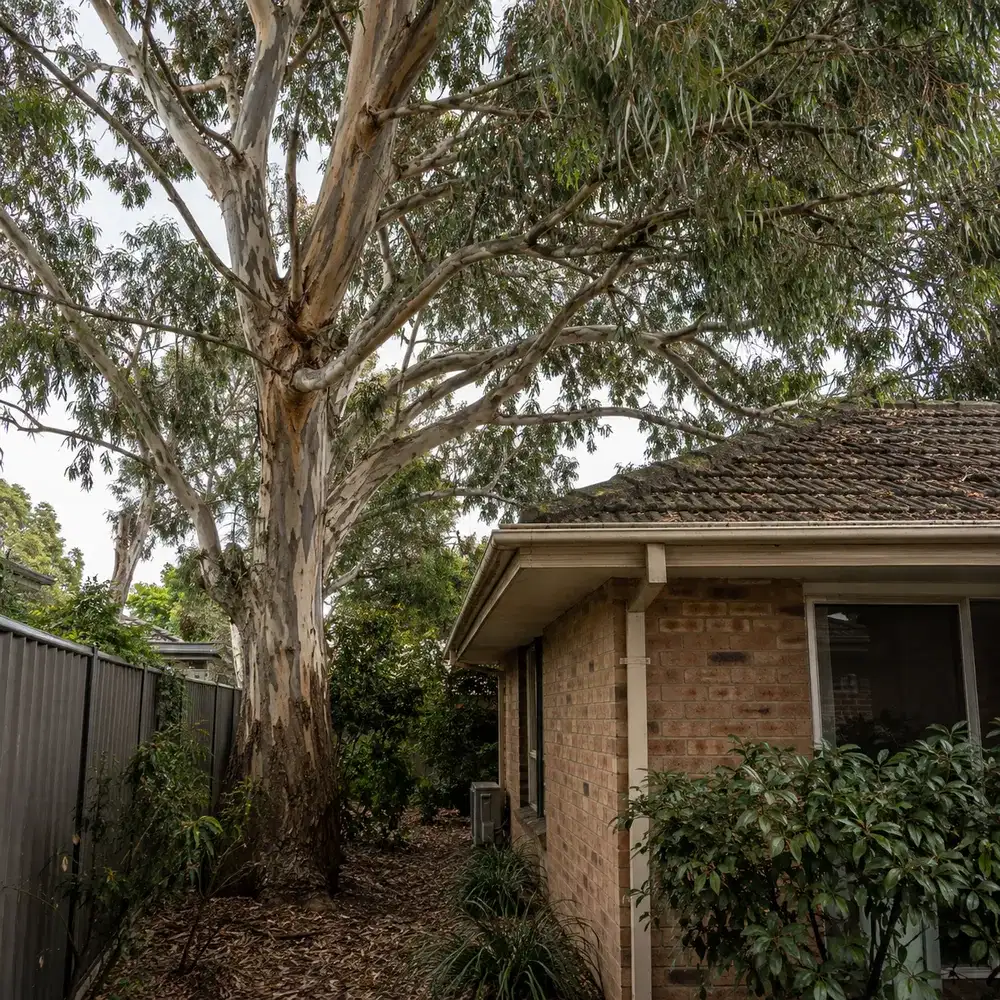
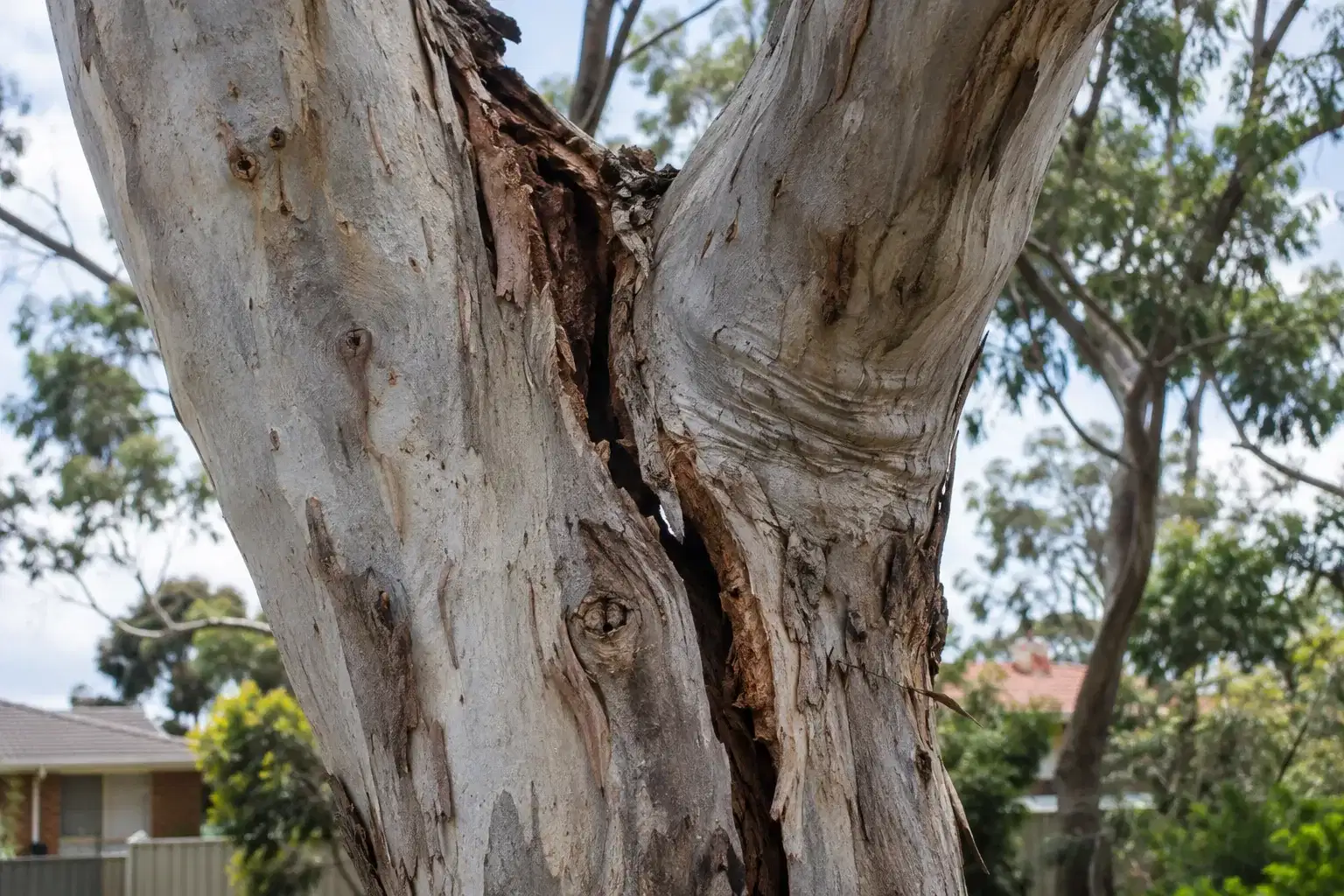
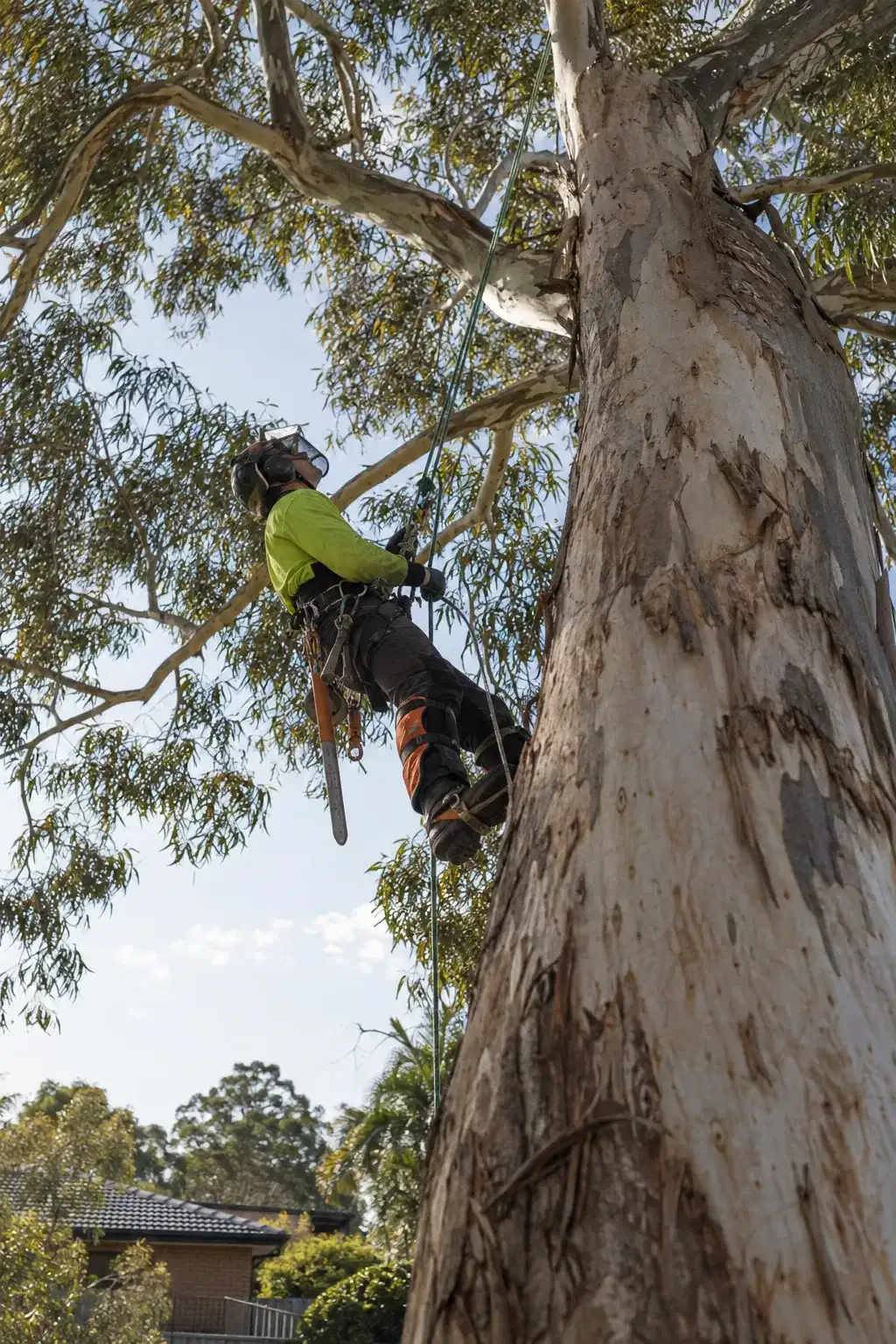
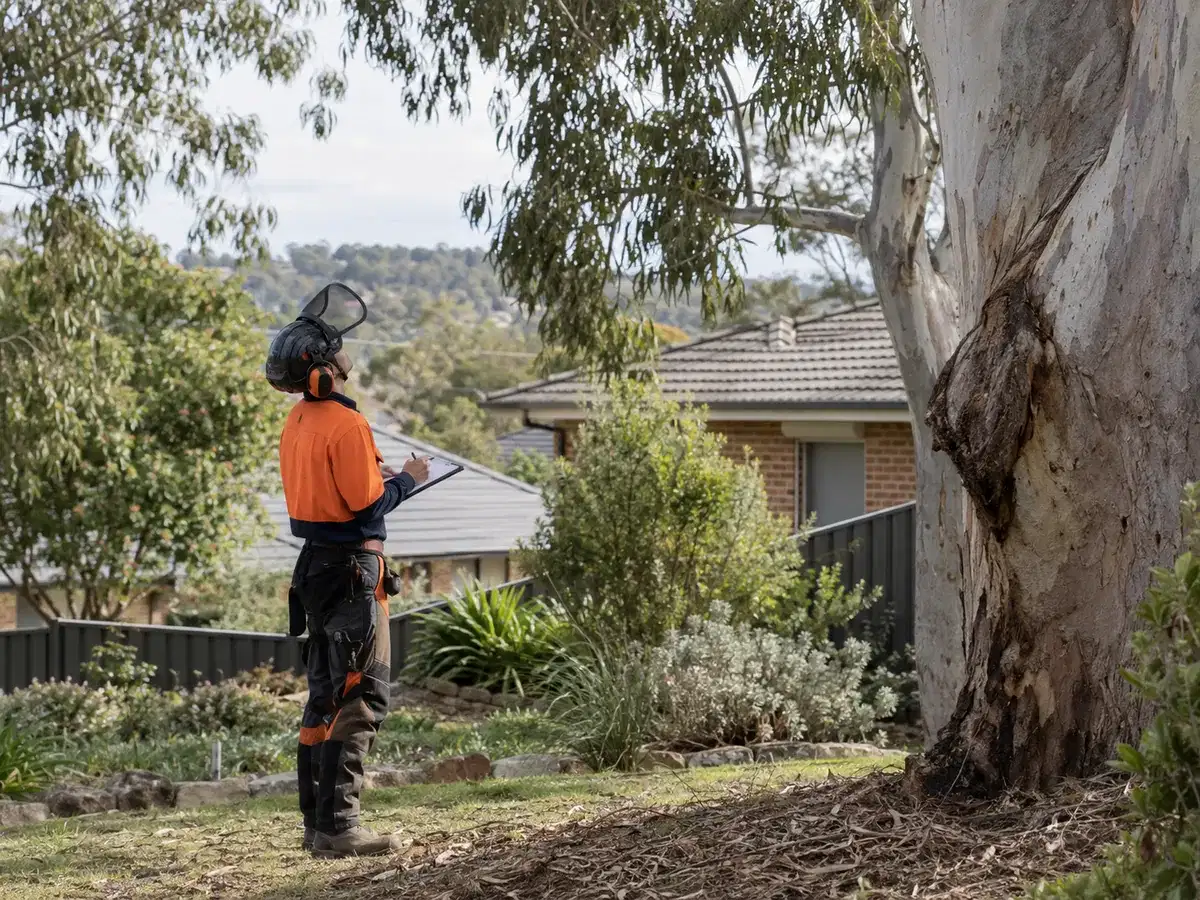
It starts at ground level, walking the full circle of the trunk. The base shows root plate movement, decay and fungal growth long before the crown does. From there it is up the trunk to the main unions, where stems divide and where a lot of failures begin, and then the crown.
| Part | What we look for | Why it matters |
|---|---|---|
| Root zone | Lifting soil, cut roots, recent digging or paving | Root plate movement shows here first |
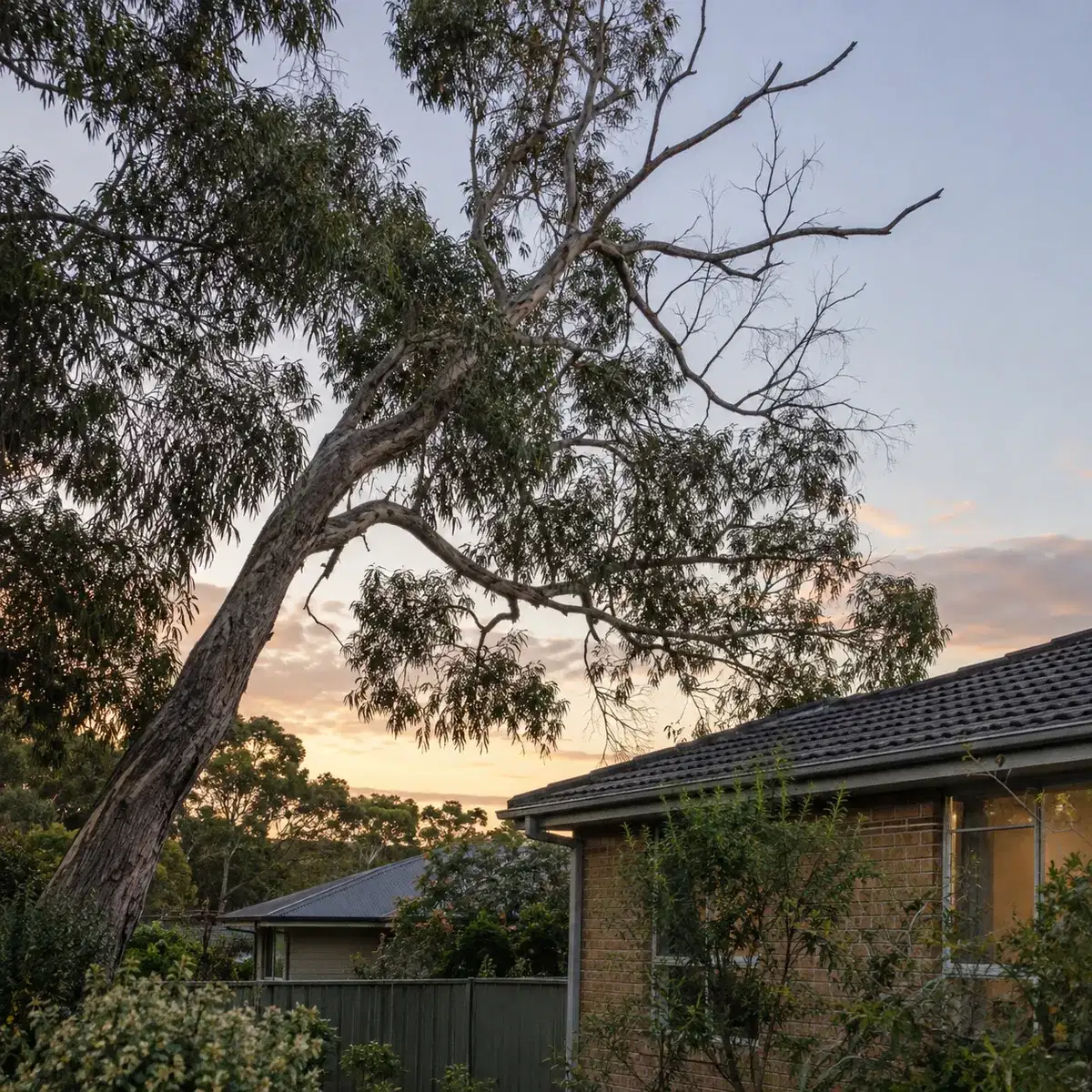
| Trunk | Cracks, cavities, old wounds, the angle of any lean | Decay here affects the whole tree |
| Unions | How the main stems attach, trapped bark | Where many failures begin |
| Crown | Deadwood, dieback, how the weight sits | Shows how the tree is coping |
| Site | What sits underneath, and how often people are there | Turns a defect into a priority |
What an assessment looks at, and why
- Part
- Root zone
- What we look for
- Lifting soil, cut roots, recent digging or paving
- Why it matters
- Root plate movement shows here first
- Part
- Trunk
- What we look for
- Cracks, cavities, old wounds, the angle of any lean
- Why it matters
- Decay here affects the whole tree
- Part
- Unions
- What we look for
- How the main stems attach, trapped bark
- Why it matters
- Where many failures begin
- Part
- Crown
- What we look for
- Deadwood, dieback, how the weight sits
- Why it matters
- Shows how the tree is coping
- Part
- Site
- What we look for
- What sits underneath, and how often people are there
- Why it matters
- Turns a defect into a priority
The site matters as much as the tree
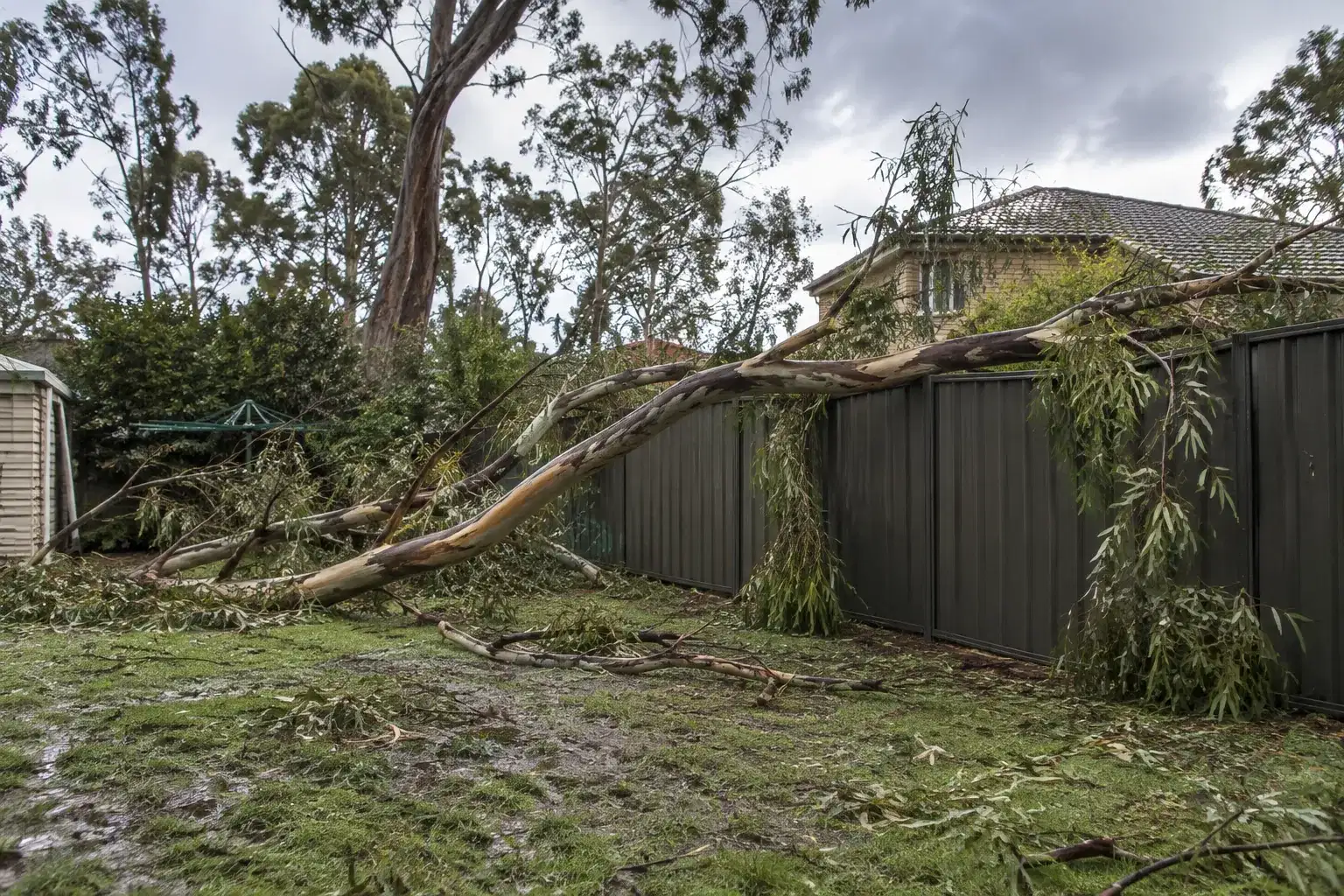
A tree with a defect over an empty paddock is a different problem from the same tree over a bedroom. So part of the assessment is mapping what sits underneath - the house, the car, the pool fence, the neighbour’s shed - and how often people are there. That is what turns an observation into a priority.
What you should get at the end
- A plain answer on what we found, including when the answer is "nothing needs doing"
- The options, from least work to most, with what each one achieves
- Which work is urgent and which can reasonably wait
- A written quote for anything you decide to go ahead with
A formal written arborist report - for a council application, an insurer or a dispute with a neighbour - is a separate piece of work. If you need one, say so up front and we will tell you what it involves and costs before starting.
The work this article describes:Tree Trimming & Pruning