In this article
People describe a job by the tree. "It is a big gum out the back." That is useful, but it is not what determines the quote. Two identical trees on two neighbouring properties can be a day apart in cost because one has a driveway to the rear fence and the other has a 750mm side gate and a set of steps.
Access is the single most useful thing you can tell us up front, and it is the thing people most consistently leave out.
| Question | What it decides |
|---|---|
| How close can the truck get? | How far everything is carried, and whether brush goes straight into the chipper |
| What is the narrowest point? | The size of machine that can reach the tree |
| What is overhead? | The order of cuts, the rigging, and sometimes who has to do the work |
| What is on the ground? | Whether material can be dropped, or has to be lowered on ropes |
The four access questions and what each one decides
- Question
- How close can the truck get?
- What it decides
- How far everything is carried, and whether brush goes straight into the chipper
- Question
- What is the narrowest point?
- What it decides
- The size of machine that can reach the tree
- Question
- What is overhead?
- What it decides
- The order of cuts, the rigging, and sometimes who has to do the work
- Question
- What is on the ground?
- What it decides
- Whether material can be dropped, or has to be lowered on ropes
How close can the truck get?
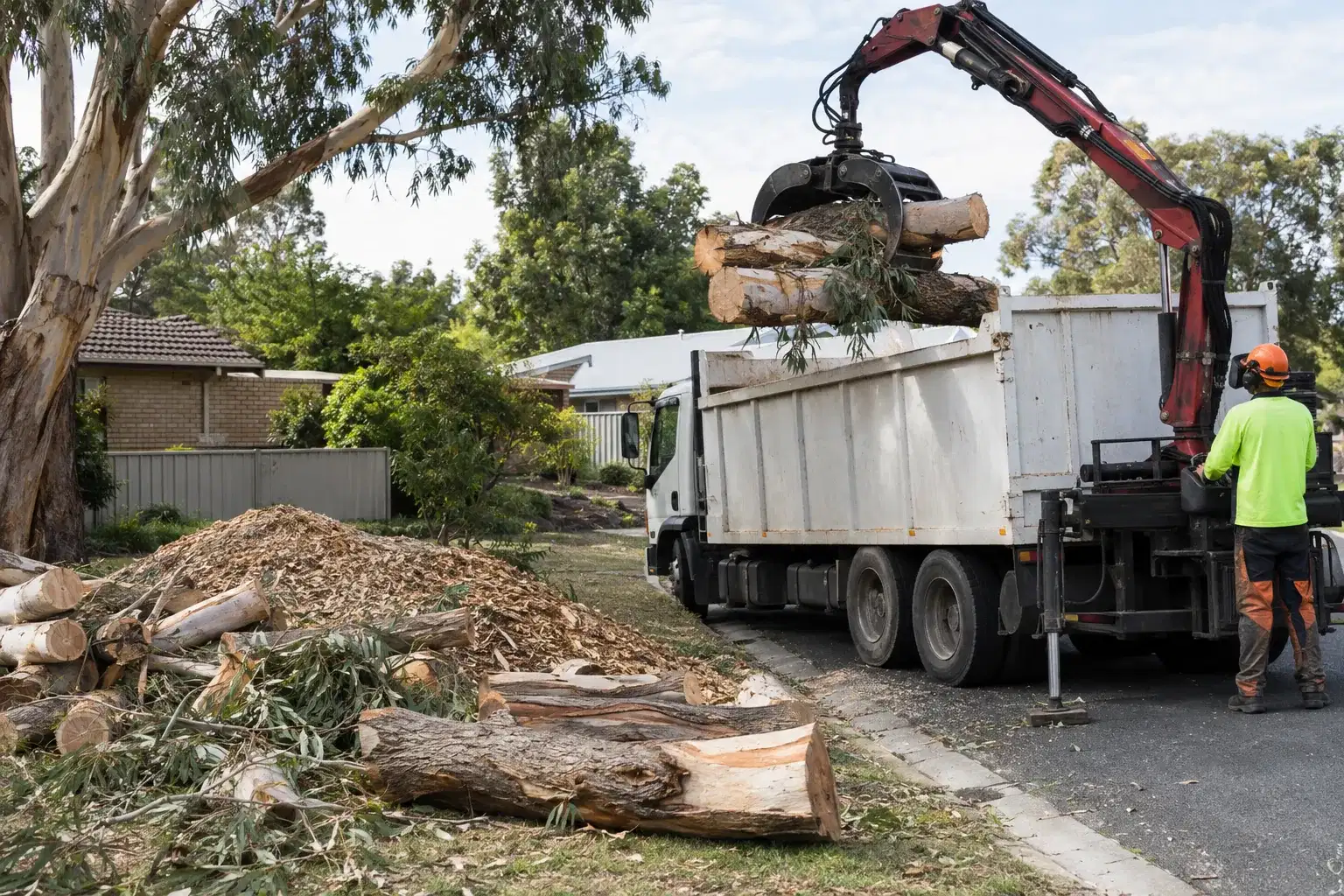
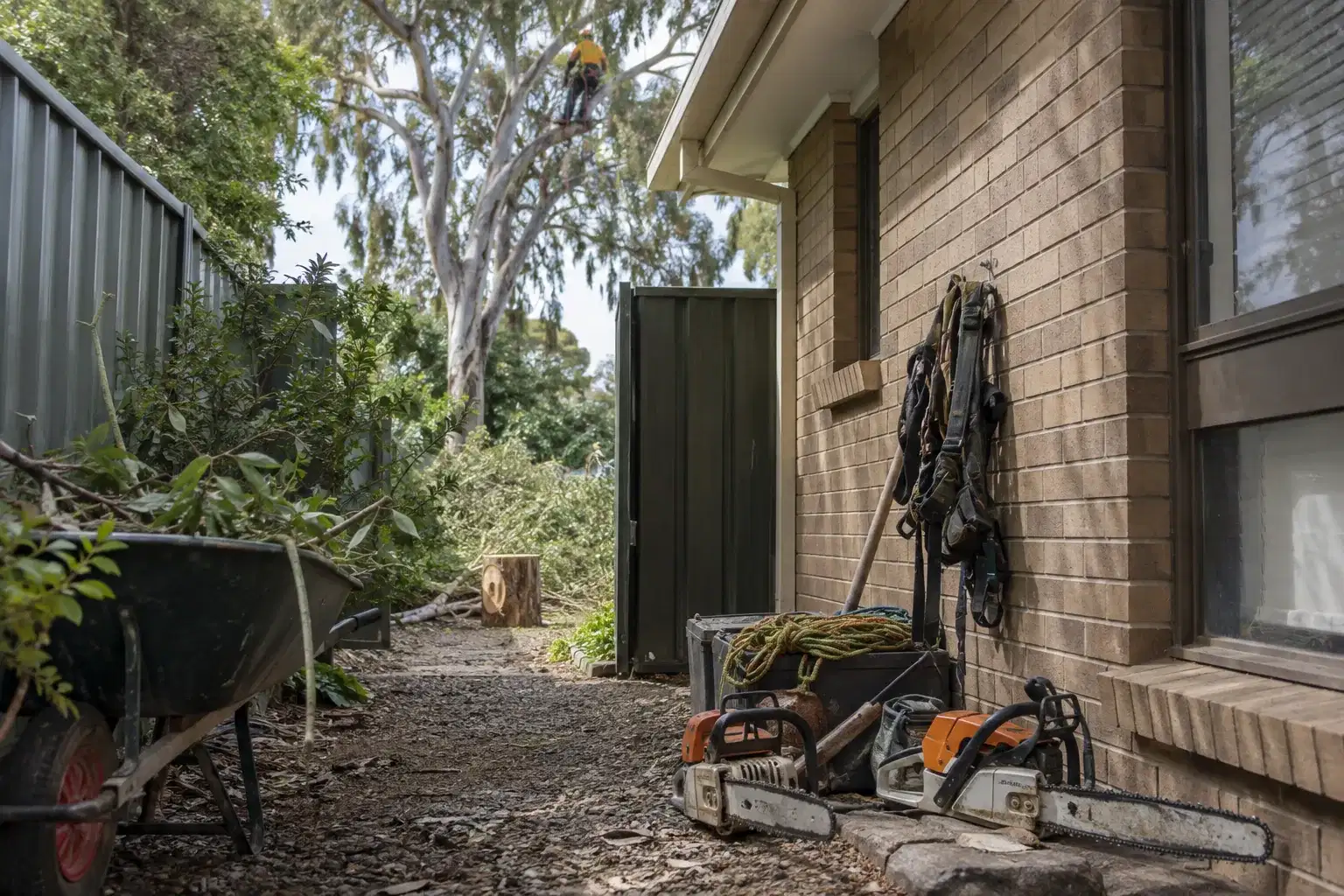
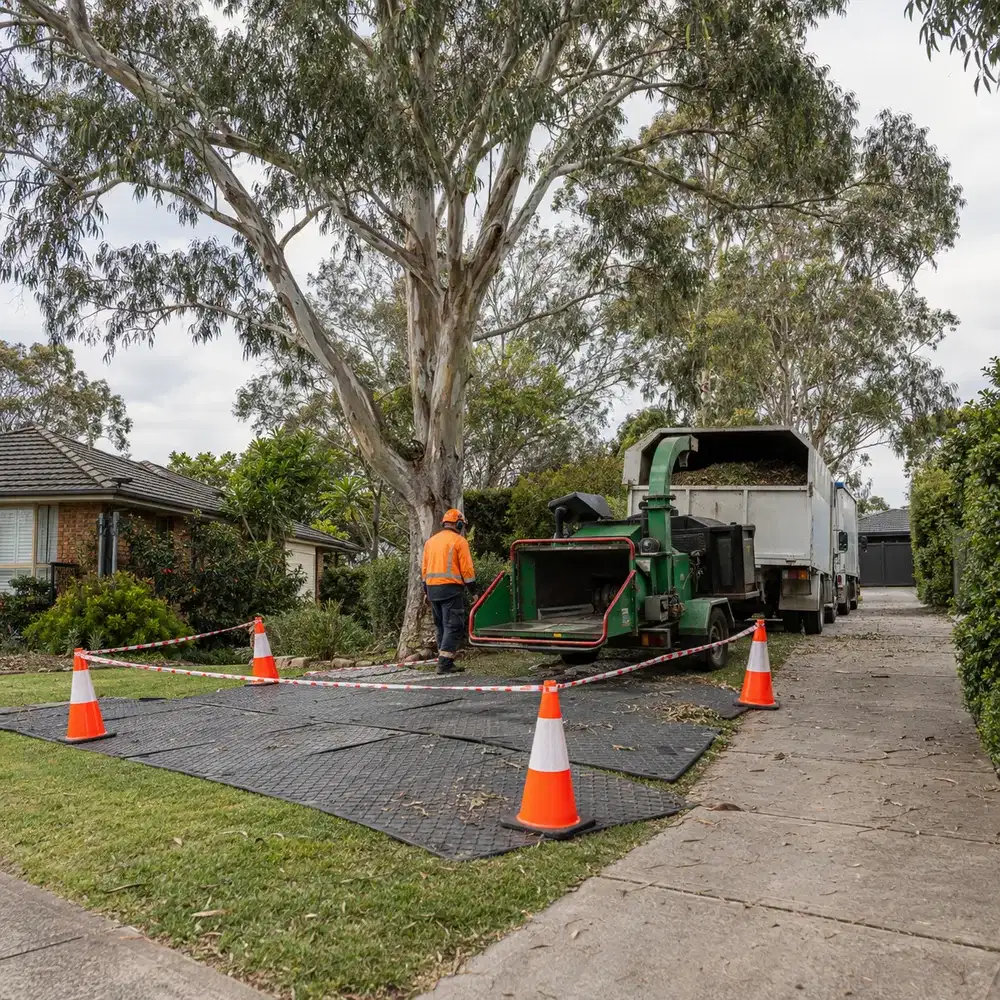
Everything that comes off a tree has to end up somewhere. If a chip truck can sit within a few metres of the work, brush goes straight into the chipper. If it cannot, every piece is carried by hand to wherever the chipper is.
- Street frontage - can a truck park directly outside, or is it a clearway, a bus route or a narrow lane?
- Driveway width, gradient and surface, and whether a laden truck would damage it
- The carry distance from the tree to the nearest point a truck can reach
- Whether there is anywhere to stage material temporarily
What is the narrowest point?
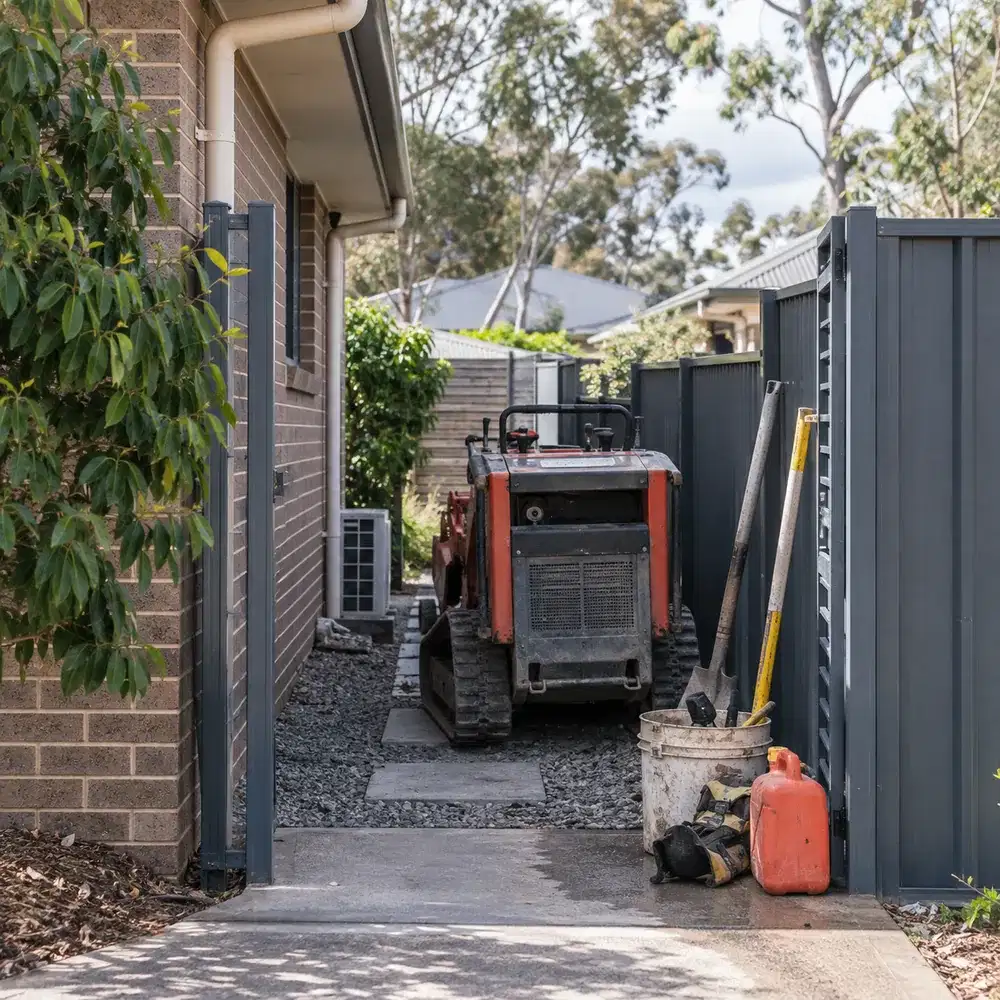
For anything behind a house, the narrowest point on the route sets the machine size. A standard side gate around 900mm will take a narrow-access chipper and a compact grinder. A 750mm gate, a fixed step or a tight corner rules most of them out.
What is overhead?
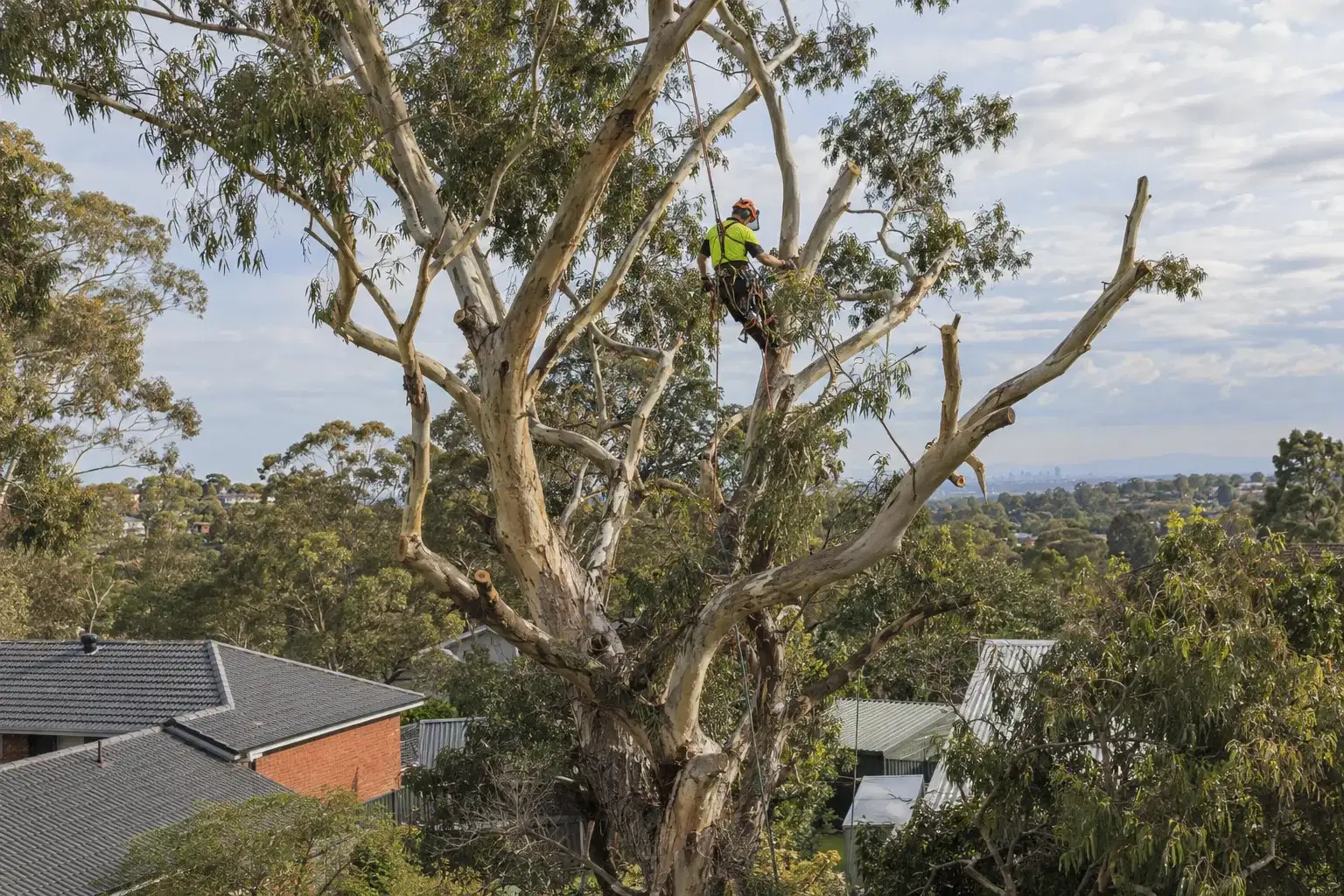
Overhead services change the method completely. Where a tree is near or under a service line, the sequence of cuts, the rigging points and sometimes the need for the supply to be isolated all follow from it.
- Service lines running to the house, and whether they pass through the canopy
- Street lines, including anything crossing the property
- Neighbouring lines that the work would swing material near
- Solar panels, antennas, skylights and anything else on a roof below the work
What is on the ground?
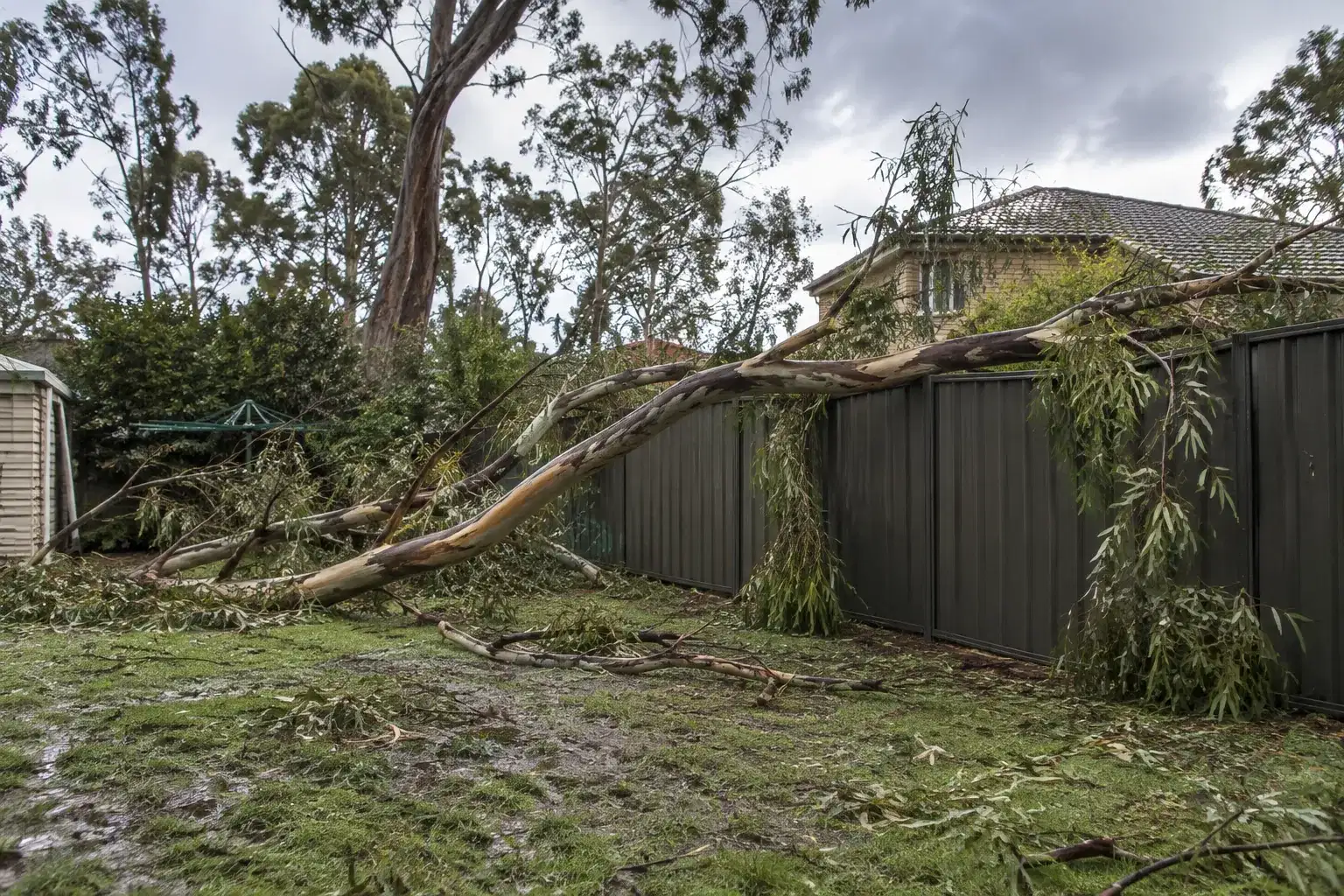
A drop zone is only a drop zone if the surface underneath can take the load. This is where most avoidable damage happens.
- Paving, tiles and decking - what will crack, and what will merely mark
- Pool covers and pool edges
- Septic lids, tank lids, pits and inspection covers
- Irrigation, garden lighting and anything shallow-buried
- Retaining walls, and whether machinery can safely work above them
What to send with an enquiry
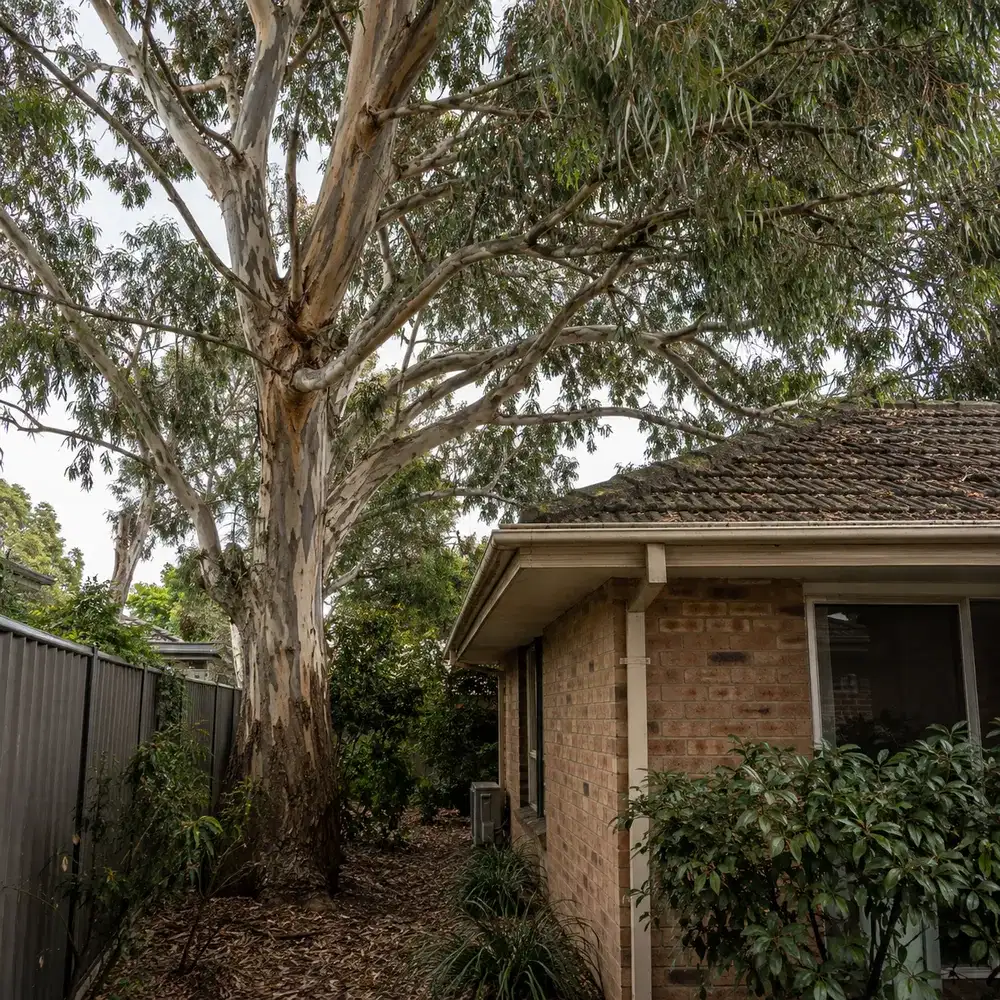
You do not need to survey the property. Three photographs and two sentences will usually do it: one wide shot of the tree in context, one of the access route from the street, and one of the narrowest point. Then tell us the gate width and whether a truck can park out the front.
That is enough to bring the right equipment the first time, which is the difference between one visit and two.
The work this article describes:Tree Removal