In this article
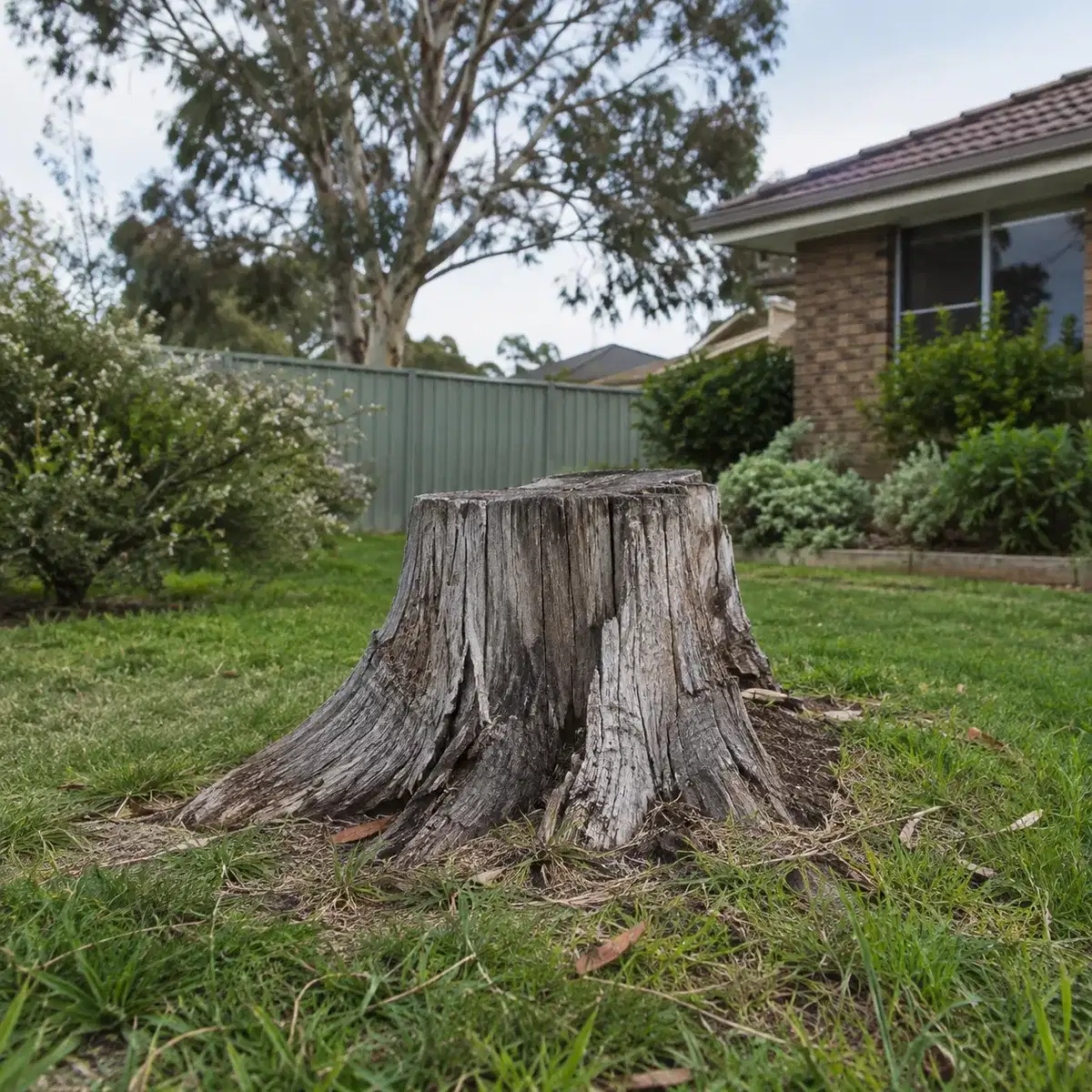
Once a tree is down, the stump tends to get decided by default: either it is included in the removal quote and ground out, or it is not and it stays. Neither is wrong. What should decide it is what you want to do with that piece of ground in the next year or two.
When leaving it is reasonable
A stump at the back of a garden bed, cut low, on a species that does not reshoot, can be left to break down on its own. It will take years rather than months, and it will soften from the outside in. If nobody mows around it and nothing is going over it, there is no pressing reason to pay for grinding.
- It sits in a bed or a corner that is not mown or walked across
- Nothing is planned for that spot - no path, slab, fence or new tree
- The species is not one that sends up shoots from the stump or roots
- It has been cut close to ground level, so it is not a trip or mower hazard
When grinding earns its cost
Grinding makes sense when the ground has a job to do. A stump in a lawn is a mower hazard every week. A stump where a driveway, a fence line or a slab is going has to come out below the finished level. And a stump that keeps throwing up new shoots will keep doing it until the stump is gone.
| The stump is | Reasonable choice | Why |
|---|---|---|
| In a bed nobody mows or walks across | Leave it | It breaks down over years without getting in the way |
| In a lawn or beside a path | Grind it | It is a mower and trip hazard every week |
| Under a planned path, slab or fence | Grind below the finished level | Anything built over it will move as it rots |
| Sending up new shoots | Grind it | The shoots grow from buds in the stump itself |
| Rotting into a hollow near the house | Grind it | It holds water and draws insects to the house |
When to grind a stump and when to leave it
- The stump is
- In a bed nobody mows or walks across
- Reasonable choice
- Leave it
- Why
- It breaks down over years without getting in the way
- The stump is
- In a lawn or beside a path
- Reasonable choice
- Grind it
- Why
- It is a mower and trip hazard every week
- The stump is
- Under a planned path, slab or fence
- Reasonable choice
- Grind below the finished level
- Why
- Anything built over it will move as it rots
- The stump is
- Sending up new shoots
- Reasonable choice
- Grind it
- Why
- The shoots grow from buds in the stump itself
- The stump is
- Rotting into a hollow near the house
- Reasonable choice
- Grind it
- Why
- It holds water and draws insects to the house
What grinding actually removes
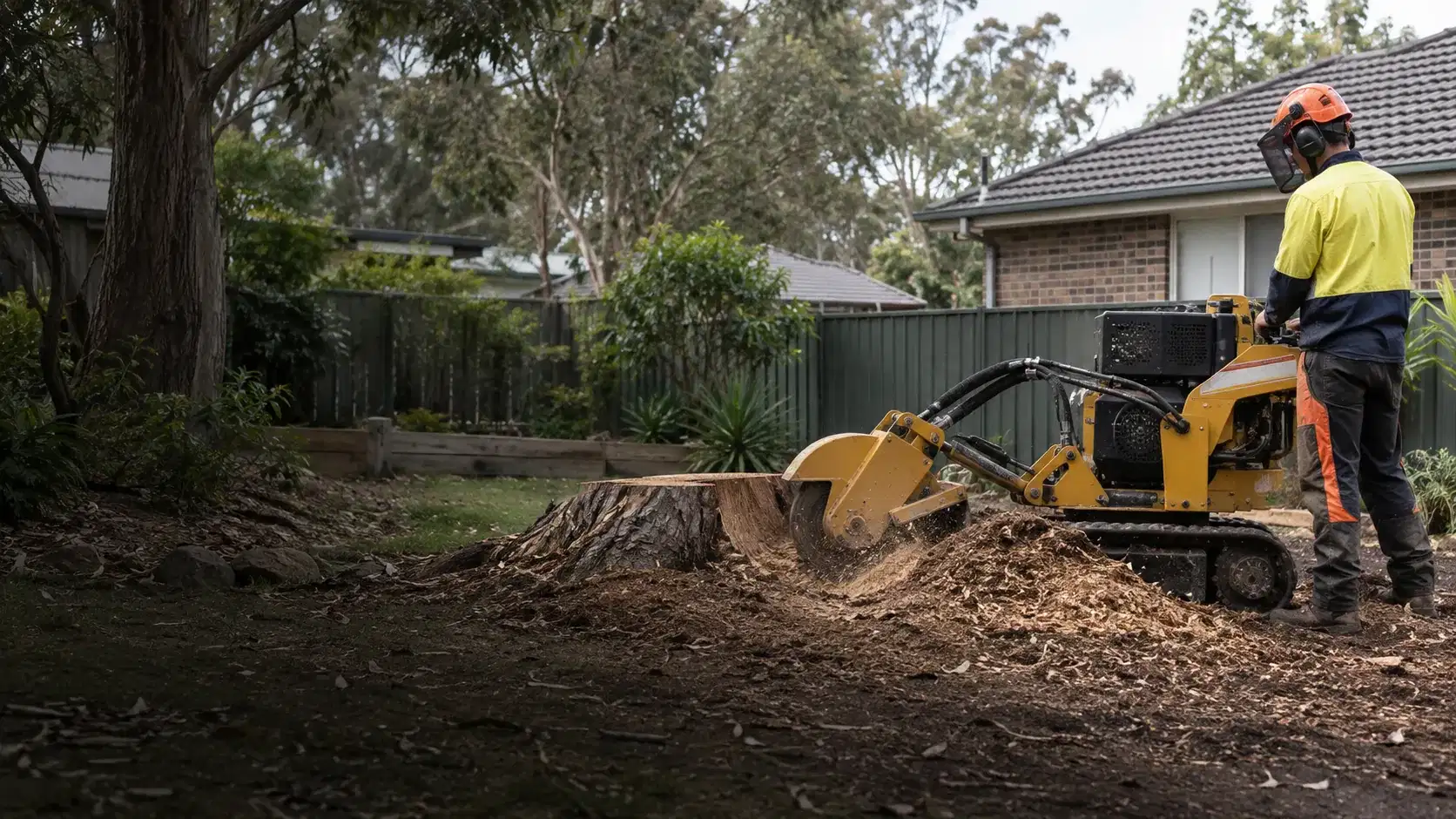
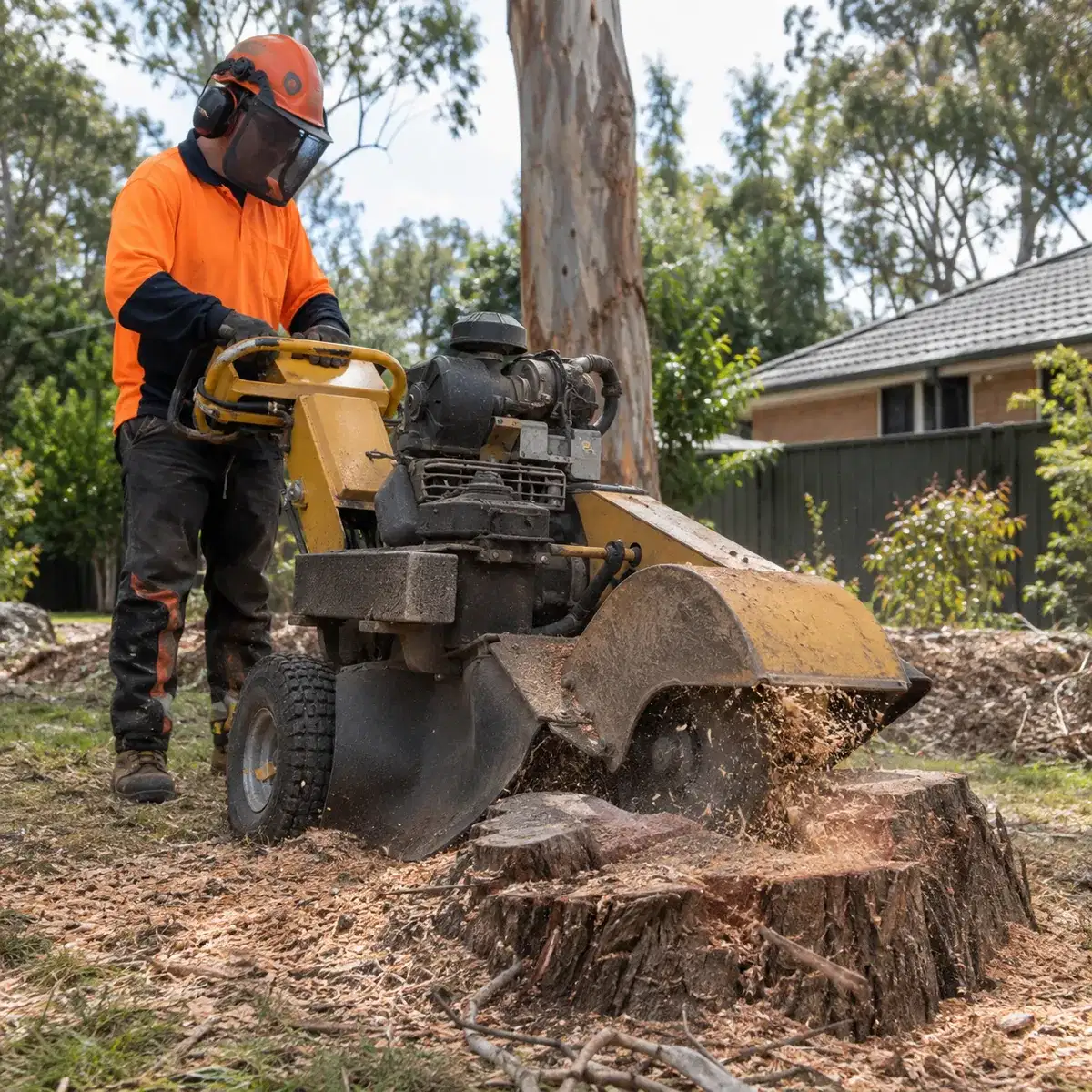
A grinder chews the stump down to below the soil surface, usually far enough for turf or a garden bed to go back over it. It does not pull the root system out. The larger roots stay in the ground and break down over the following years, which is normal and rarely causes trouble.
The grindings
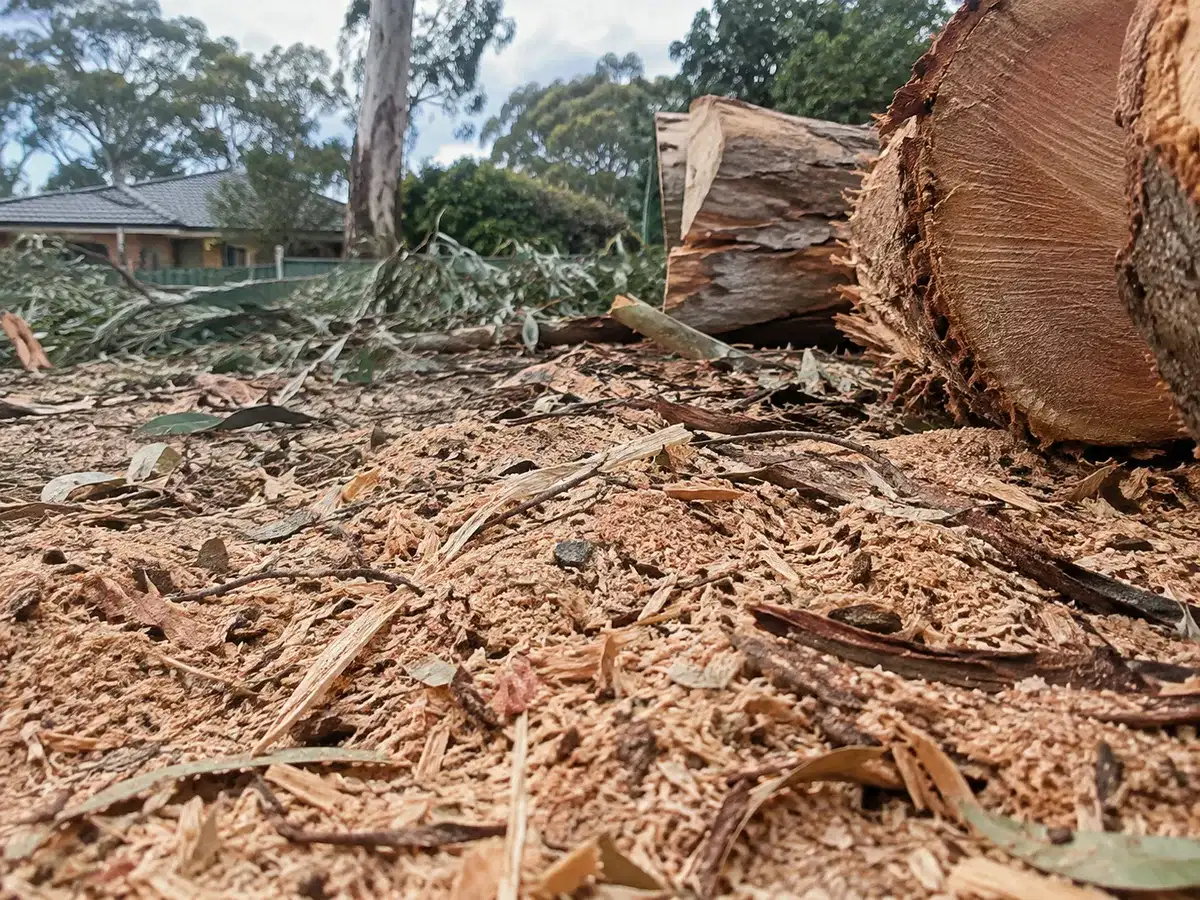
Grinding a stump produces a surprising volume of mixed wood chip and soil. It can be spread as a rough mulch, used to fill the hole, or taken away. If you plan to lay turf straight over the spot, most of the grindings need to come out and be replaced with soil - fresh wood chip settles and robs the new turf of nitrogen while it breaks down.
A stump is only a problem if the ground has somewhere to be. Start with what the spot is for.
The work this article describes:Stump Grinding