Slope on the harbour side
Blocks falling away toward the water mean the base of the tree and the place a limb would land are at different levels. Rigging has to account for the drop, and a chipper often cannot get to where the material is.
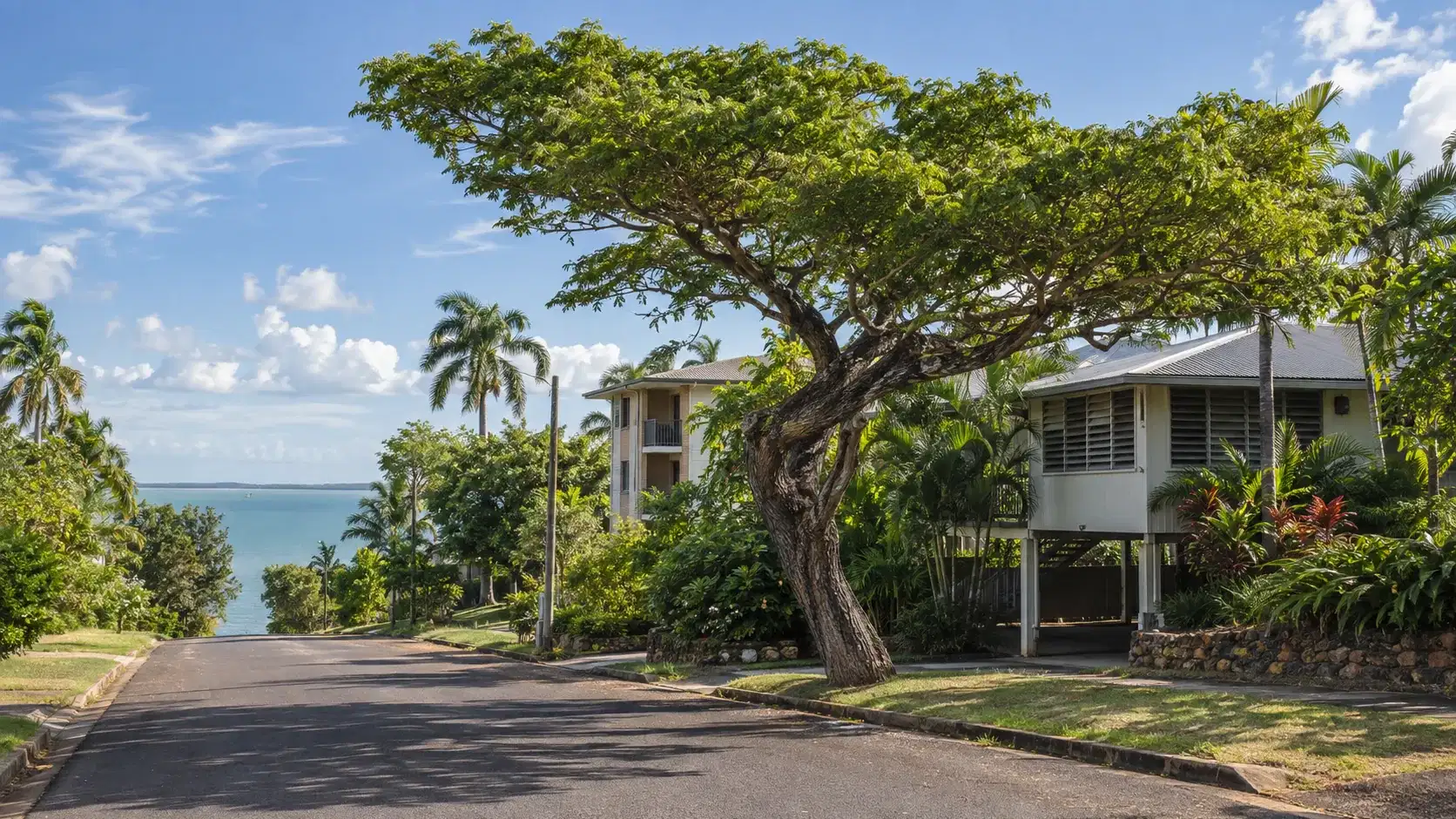
A peninsula suburb with water on two sides. Trees here carry a load that identical trees three kilometres inland do not, and the blocks give you almost nowhere to work from.
Larrakeyah runs out onto a headland, so the prevailing wind arrives off open water rather than filtered through a few streets of canopy. The practical result is that the crowns here are asymmetric - grown away from the weather - and the limbs that fail are usually on the sheltered side, where the tree has put on length it cannot support in a squall.
The housing is a mix: pre-Tracy homes that survived, unit blocks from the eighties, and renovated houses on the escarpment side with a considerable drop below them. Verges are narrow, streets are narrow, and a lot of the mature planting sits between a fence line and a kerb with about two metres to play with.
Where crews are on most working days, which is usually reflected in how quickly we can attend.
Species behave differently, and the same cut on two of them produces two different outcomes. This is the mix we expect at this address.
Wide, heavy, horizontal limbs and brittle unions. On a wind-exposed block these are the limbs that come down, and reduction has to be done in a way the tree can actually respond to.
Planted through the older streets and now well past the size the verge was designed for. Root plates lift kerbs and driveways long before the crown is a problem.
Salt-tolerant and common on the seaward blocks. Comparatively soft timber that tears rather than breaks cleanly, so cuts have to be placed with that in mind.
Most of the difference between two quotes on the same tree is here, not in the tree.
Blocks falling away toward the water mean the base of the tree and the place a limb would land are at different levels. Rigging has to account for the drop, and a chipper often cannot get to where the material is.
There is frequently no legal place to park a truck near the tree. We would rather know that before quoting than discover it on the day.
Several streets back onto restricted land. Where a canopy crosses that boundary the work stops at the fence line unless the neighbouring authority has been engaged first.
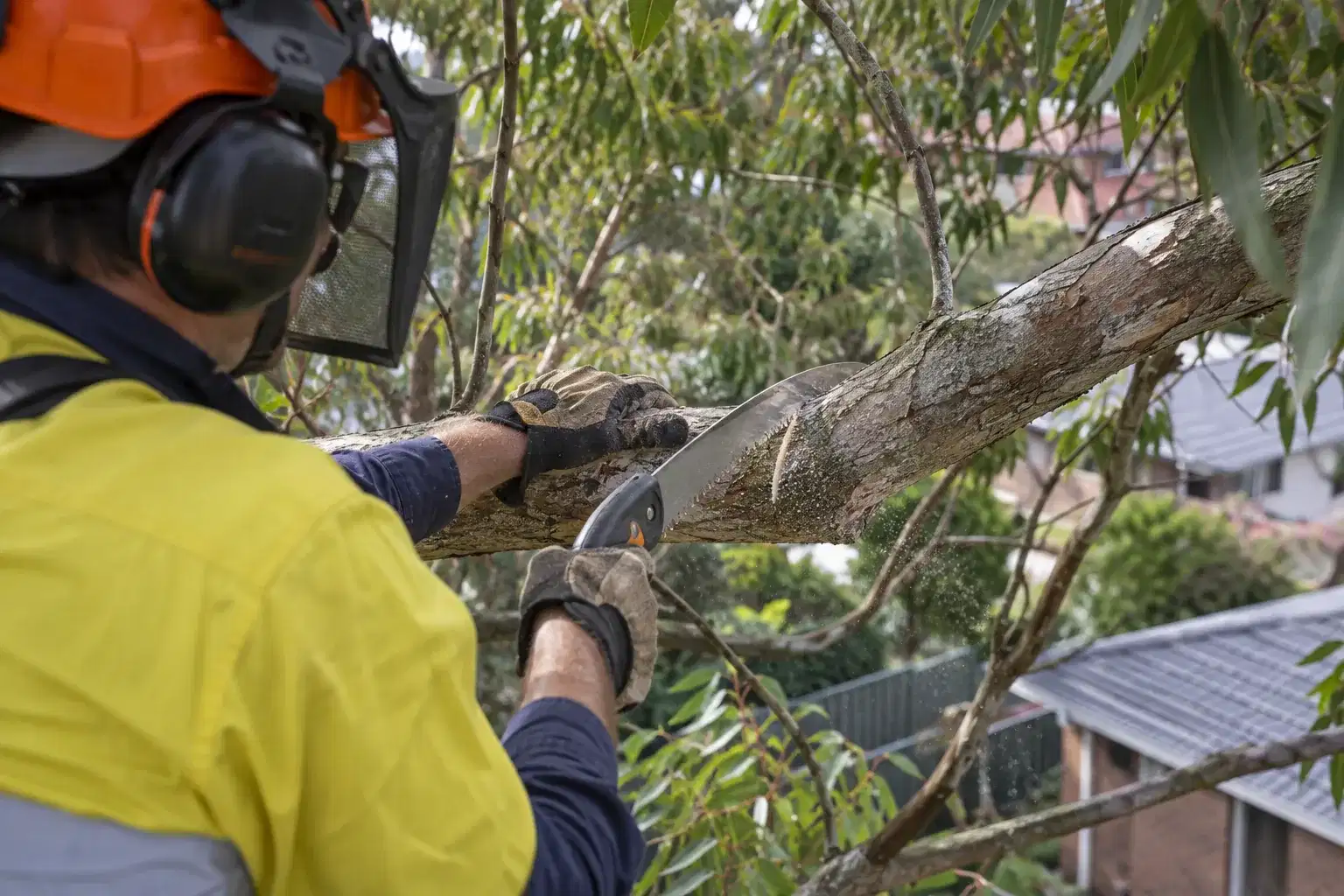
Selective cuts that solve the problem and ready the tree for cyclone season.
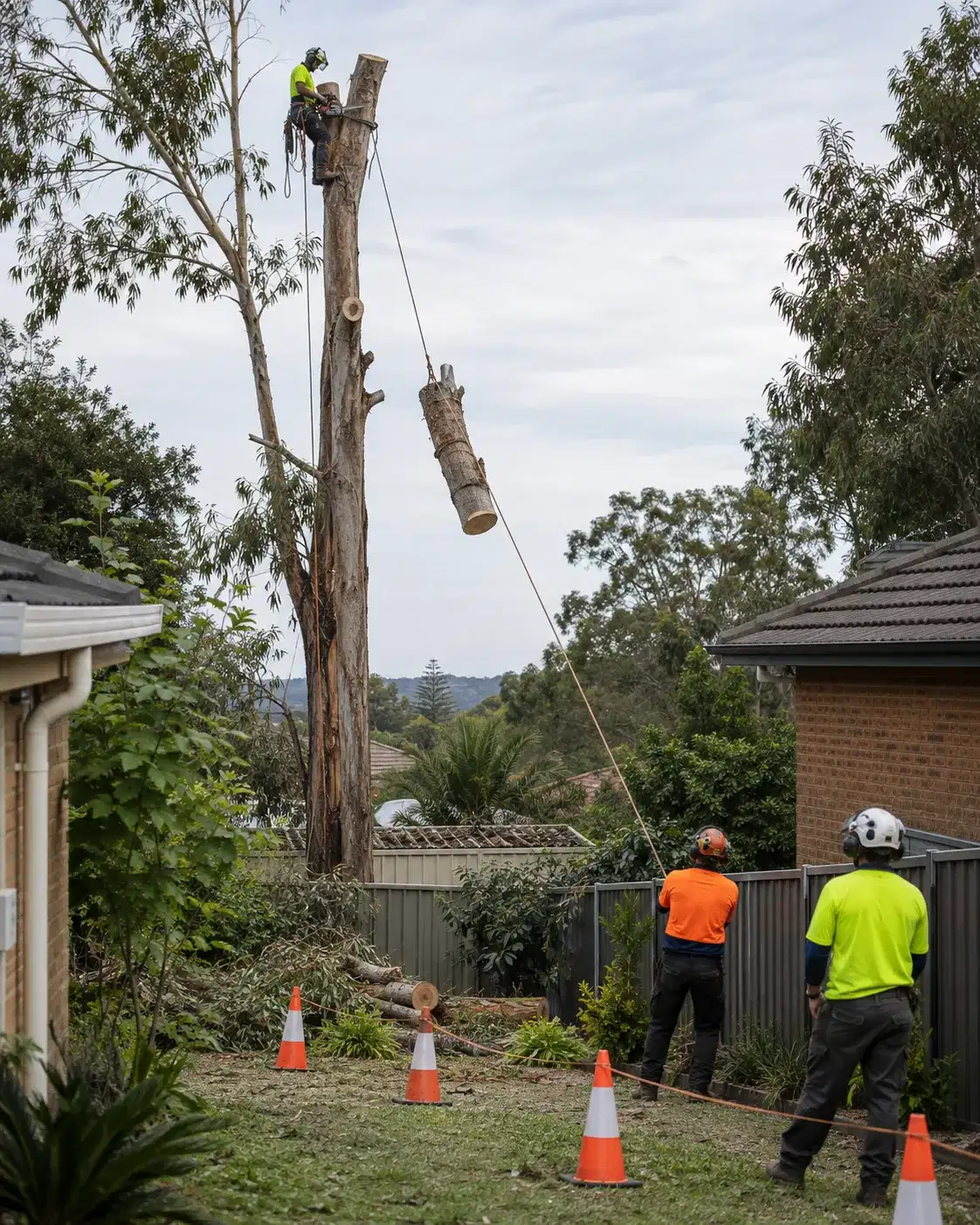
Controlled, sectional removal where a tree or palm can no longer stay.
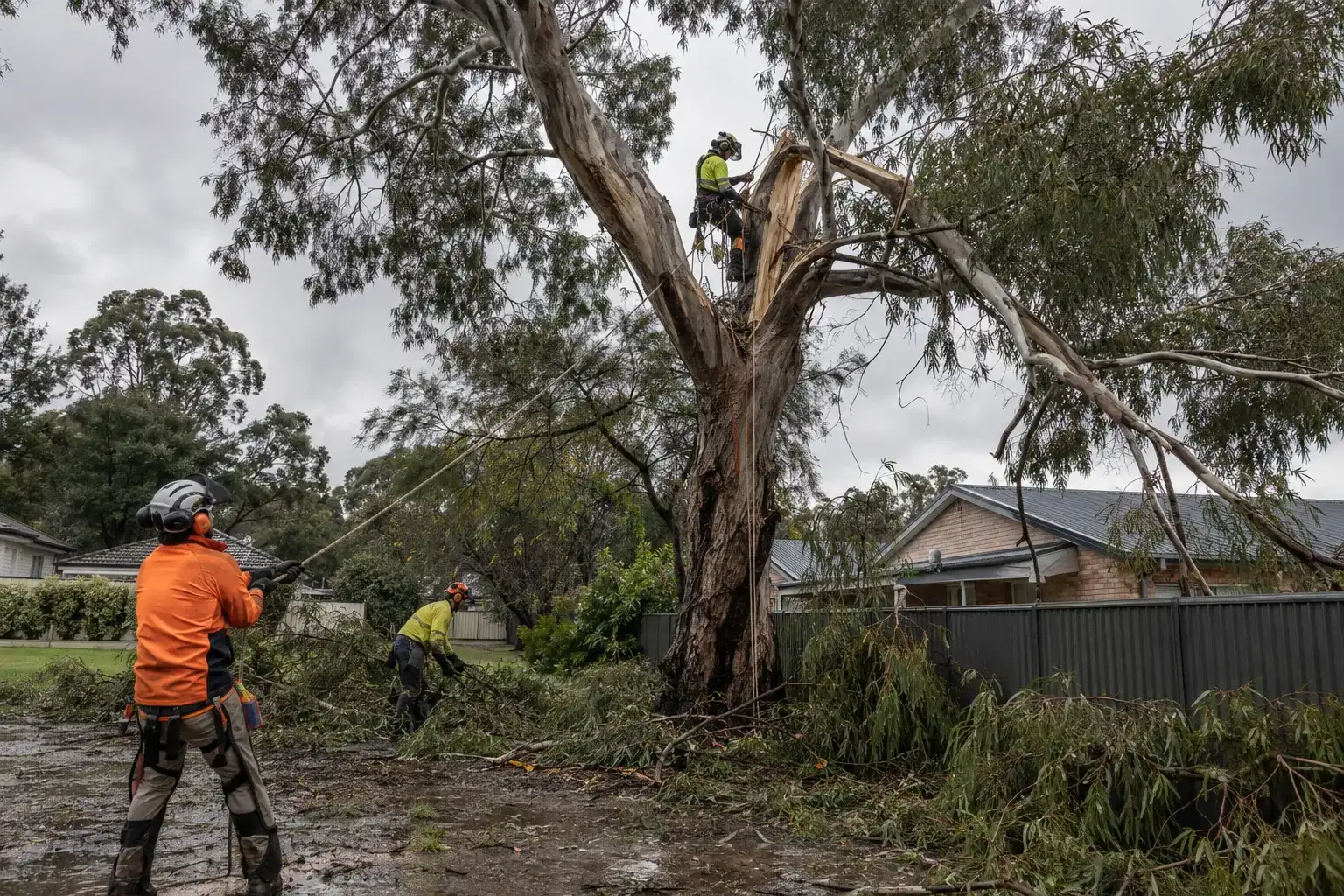
Storm damage and failures made safe, then made right.
Questions that come up in Larrakeyah and not everywhere else.
Usually not on its own - that shape is the tree responding to years of wind, and it is generally well anchored for it. What matters more is the growth on the sheltered side, which is often long, heavy and not built for the day the wind swings.
Sometimes, with a longer rigging setup. Where the drop is severe the honest answer is that the job takes longer and costs more, and we would rather say so at quote than at the end.
Coverage does not stop at a suburb sign. These are the areas either side of this one.
Larrakeyah, NT
Send the address, a photograph and what you are worried about. We will tell you what we would do and what it would cost - including when the answer is less work than you expected.