Scour is invisible from the crown
A tree on the bank can look completely healthy while the soil holding it has gone. After a big wet, the bank side is what gets inspected first.
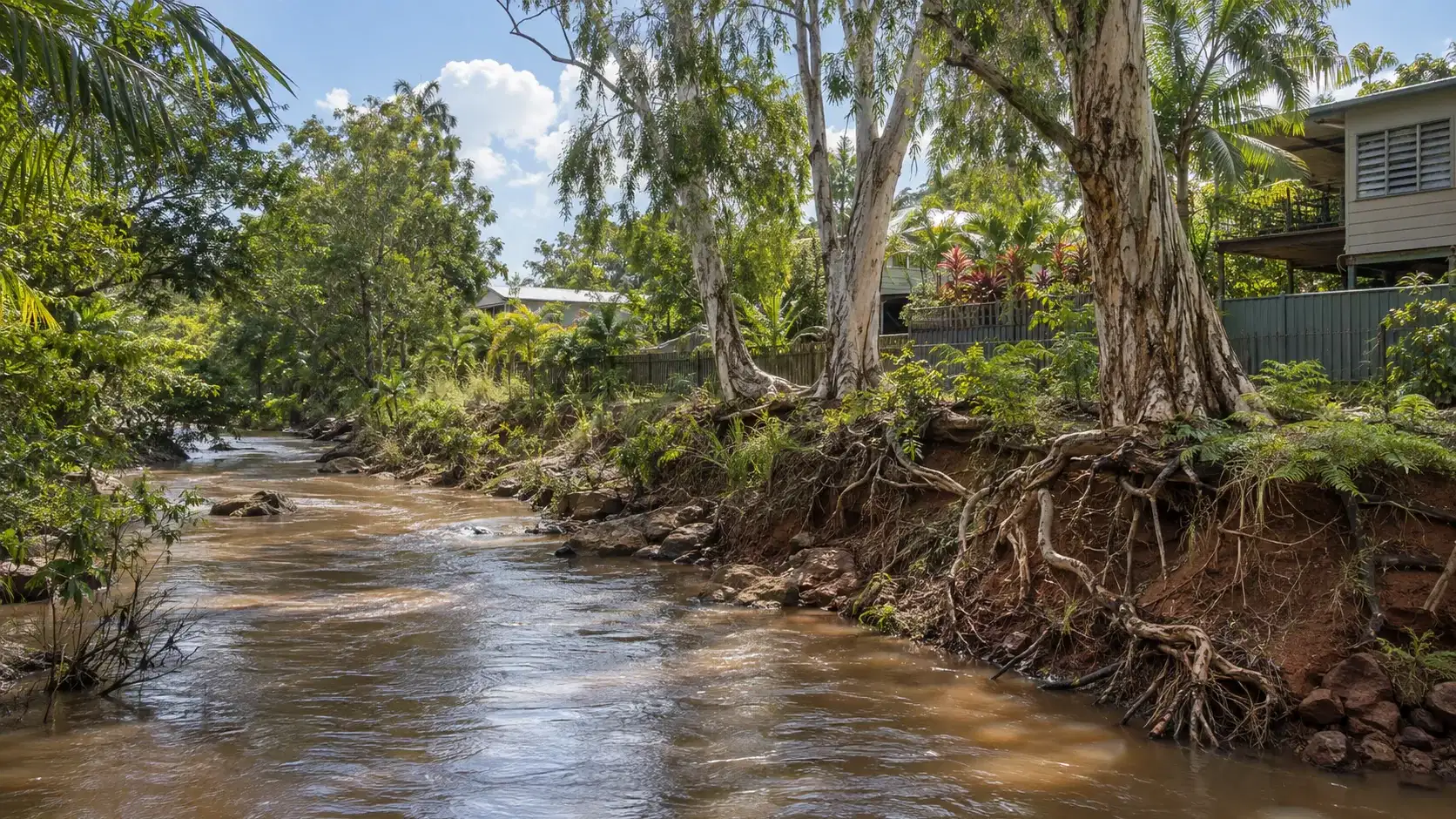
The creek is the defining feature and the defining risk. Blocks that back onto it deal with water, silt and scour that the next street over never sees.
The creek corridor carries a genuine volume through the monsoon, and the ground beside it moves. Trees along the bank are regularly undermined from below - scour takes the soil out from one side of a root plate while the crown stays perfectly healthy - and that is a failure mode you cannot see by looking up.
The corridor also holds native paperbark and melaleuca that belong there and generally should stay, which changes the brief on the blocks backing onto the reserve. Most of that work is clearance from a fence line and deadwood removal over a yard, not removal of the tree.
Where crews are on most working days, which is usually reflected in how quickly we can attend.
Species behave differently, and the same cut on two of them produces two different outcomes. This is the mix we expect at this address.
Native to the corridor and well adapted to being wet. Sheds bark and small limbs constantly; usually a clearance and deadwooding job.
On the residential streets away from the creek. Standard build-up limb drop, with the added factor that the ground behind it drains slowly.
Widely planted along rear boundaries facing the reserve, and widely regretted. Removal has to take the rhizome or it returns.
Most of the difference between two quotes on the same tree is here, not in the tree.
A tree on the bank can look completely healthy while the soil holding it has gone. After a big wet, the bank side is what gets inspected first.
Trees inside the corridor are generally council or crown land. We can assess and report on one, but the work is not the adjoining owner's to authorise.
Blocks near the creek can be genuinely unworkable for machinery for weeks. Planned work is better booked for the dry.
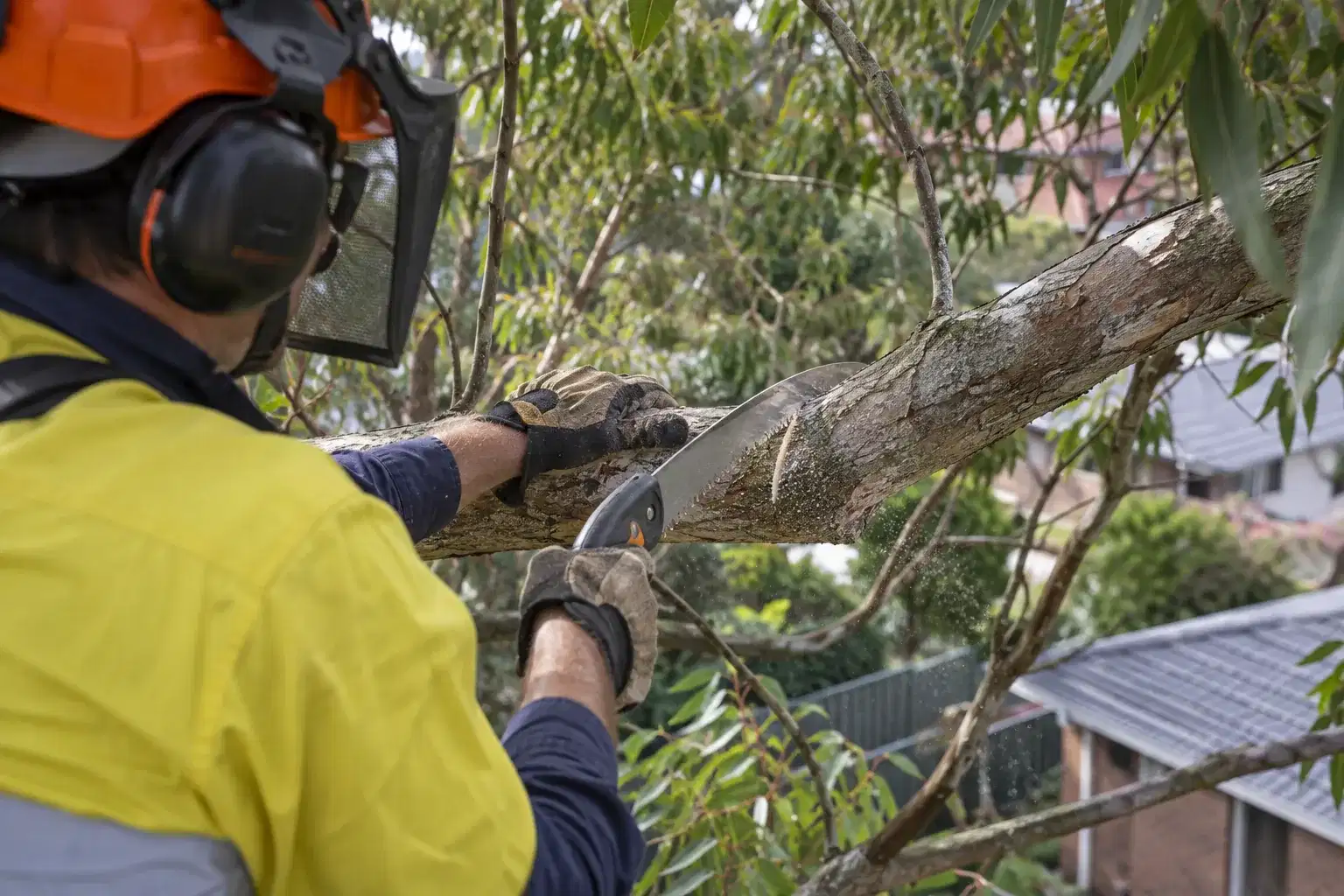
Selective cuts that solve the problem and ready the tree for cyclone season.
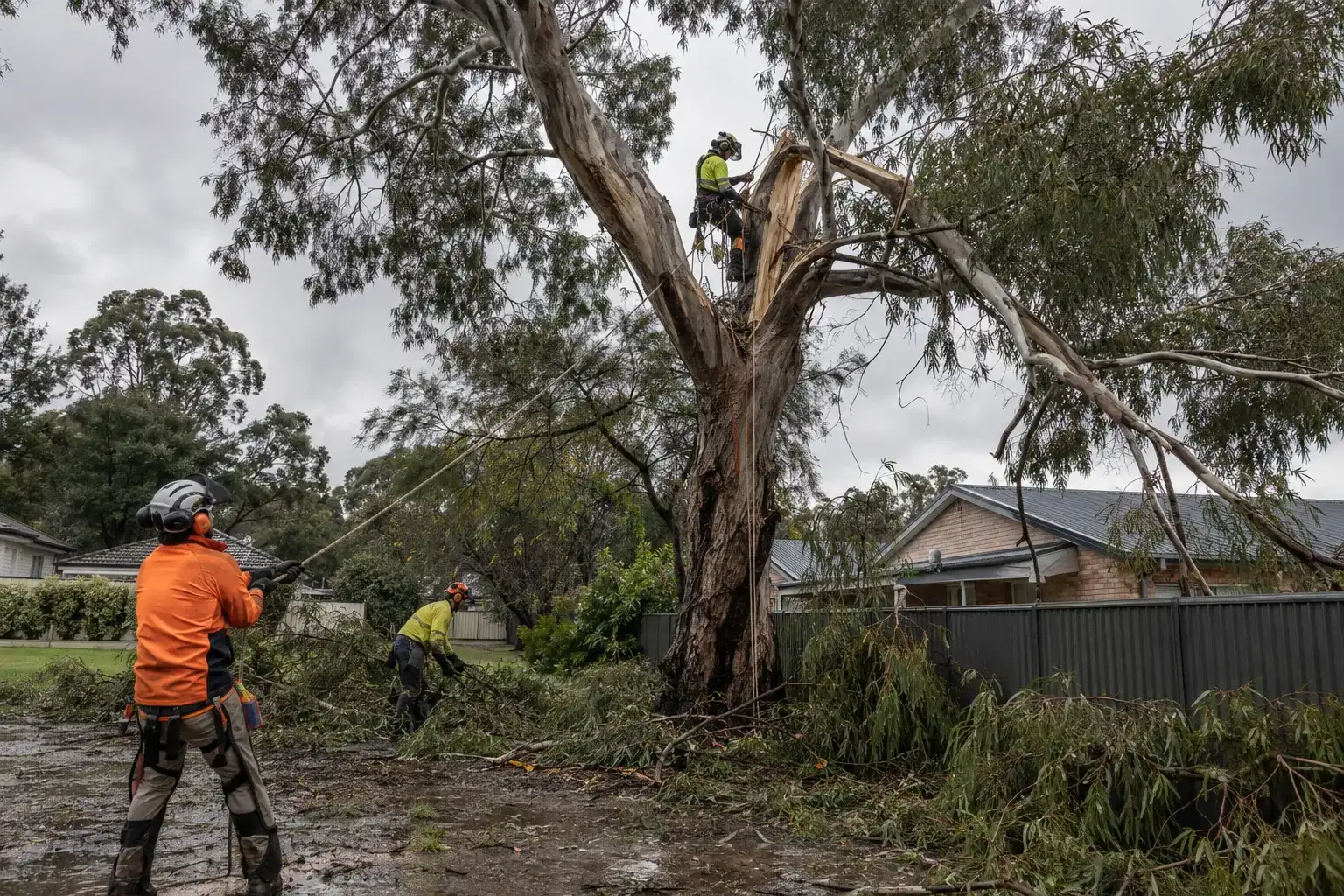
Storm damage and failures made safe, then made right.
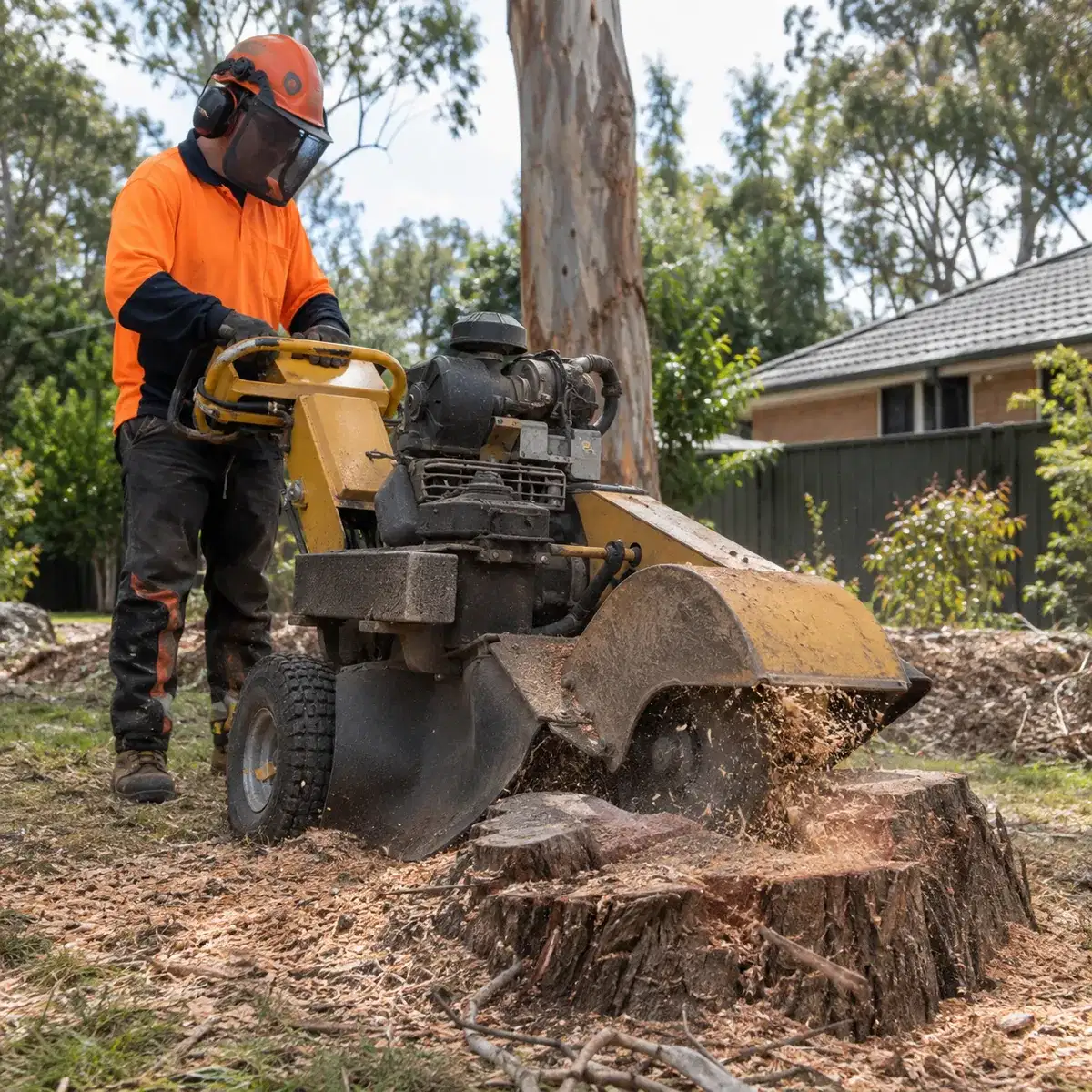
Grinding, root work and getting the ground usable again.
Questions that come up in Rapid Creek and not everywhere else.
If it is inside the reserve it is not yours to remove, even where it overhangs your block. We can assess it, put the finding in writing, and you have something concrete to take to the council.
No - that is normal for the species and not a sign of decline. If the volume is the issue rather than the tree, that is a maintenance conversation rather than a removal one.
Coverage does not stop at a suburb sign. These are the areas either side of this one.
Rapid Creek, NT
Send the address, a photograph and what you are worried about. We will tell you what we would do and what it would cost - including when the answer is less work than you expected.